Harris Endorsements

While Kamala Harris’ numerous endorsements have received some press coverage, little of the coverage has highlighted just how unusual some of those endorsements are.  Of course, she’s been endorsed by current and former Democratic lawmakers and cabinet officials.  Duh.  What’s different this time around is the number of high-ranking Republican officials and former national security officials who have also endorsed her.

Over 100 former Republican members of congress and senior national security officials from the Reagan, H.W. Bush, W. Bush, and Trump administrations have formally endorsed Harris.  In addition, Harris was endorsed by 741 former high-ranking national security officials — including 233 general & flag officers and 15 four-star generals.  These people served under both Democratic and Republican administrations and, as a group, national security officials tend to be non-partisan.  Their letter specifically called out Trump’s “demonstrated chaotic and unethical behavior” as president among their reasons to support Harris.

Here is just a partial list of people from Trump’s own party who have broken ranks to endorse Harris:

  • Former GOP VP Dick Cheney
  • Former GOP Sens. Jeff Flake & William Cohen
  • Former GOP Reps. Liz Cheney, Adam Kinzinger, Charles Boustany, Barbara Comstock, Mickey Edwards, & Christopher Shays
  • Former GOP MA Gov. William Weld
  • Former GOP NJ Gov. Christine Todd Whitman
  • Former GOP GA Lt. Gov. Geoff Duncan
  • Former GOP Attorney General Alberto Gonzales
  • Former GOP U.N. Ambassador Ken Adelman
  • Former GOP CIA & FBI Director William Webster
  • Former GOP CIA Director Michael Hayden
  • Former GOP FBI Director James Comey
  • Former GOP Director of National Intelligence John Negroponte
  • Former GOP Secretary of Defense Chuck Hagel
  • Former GOP Secretary of Defense William Cohen
  • Former GOP World Bank President Robert Zoellick

Well-respected, retired military brass have also been crystal clear about their concerns:

  • Gen. John Kelly, former Chief of Staff under Trump, called him “a person that has nothing but contempt for our democratic institutions, our Constitution, and the rule of law.”
  • Gen. Mark Milley, former Chairman of the Joint Chiefs of Staff under Trump, called him “the most dangerous person to this country … A fascist to the core.”
  • Gen. James Mattis, former Secretary of Defense under Trump, called him a threat to the Constitution and “the first president in my lifetime who does not try to unite the American people — does not even pretend to try.  Instead, he tries to divide us.”
  • Gen. H. R. McMaster, former National Security Advisor under Trump, said that Trump’s “ego and love of self … drove him to abandon his oath to support and defend the Constitution.”
  • Gen. Stanley McChrystal, leader of the Joint Special Operations Command, called Trump “immoral” and “dishonest.”
  • Adm. Bill McRaven, leader of the bin Laden operation, said of Trump: “When presidential ego and self-preservation are more important than national security — then there is nothing left to stop the triumph of evil.”

There are also a ton of Republicans who can’t quite bring themselves to endorse a Democrat but who have nonetheless stated that they will not vote for Trump.  Just a few of these are:

  • Former GOP VP Mike Pence
  • Current GOP Sens. Mitt Romney, Susan Collins, Lisa Murkowski, Bill Cassidy, & Todd Young
  • Former GOP Sens. Rob Portman, Nancy Kassebaum, Alan Simpson, John Sununu, & Pat Toomey
  • Former GOP Speaker of the House John Boehner
  • Former GOP Speaker of the House Paul Ryan
  • Former GOP NJ Gov. Chris Christie
  • Former GOP National Security Advisor (under Trump) John Bolton
  • Former GOP Secretary of Defense (under Trump) Mark Esper
  • Former GOP White House Special Counsel (under Trump) Ty Cobb

Even a number of former senior White House staffers who worked with Trump on a daily basis have endorsed Harris, including Stephanie Grisham, Alyssa Farah Griffin, Cassidy Hutchinson, Sarah Matthews, Olivia Troye, & Miles Taylor.

The above is simply unprecedented.  Large numbers of senior Reagan Republicans, Bush Republicans, and former Trump Republicans are warning us of the clear and present danger posed by a possible return of Trump to the White House.  Meanwhile, there is no movement of Carter, Clinton, Obama, or Biden Democrats campaigning against Harris.

While I wouldn’t expect anyone to vote based solely upon someone else’s vote, the massive swing of serious, career Republicans away from Trump should at least be considered.  Similarly, the bipartisan voices of people who have devoted their lives to our national security deserve to be heard.

Just sayin’.

Early Voting

Early voting in Texas started Monday and I was in the first wave of voters.  It was a bit busy, and I spent my time in line guessing how every person was going to vote.  Of course, my guesses could have been wrong, but I’d have bet good money on my accuracy for about 95% of the voters.  I saw about 60 folks in line to vote in my purple county and the D/R split was about 50/50, with maybe a slight D tilt.  I suspect that my micro-analysis is at least as accurate as most polls.

Speaking of polls, I don’t trust them at all.  Many focus on the meaningless popular vote, most of the swing-state poll methodologies are flawed at best, and even the few good polls are merely snapshots of a past that is several news cycles old.  Worse, most news organizations are either treating all polls the same or are aggregating all of them into some useless headline-grabbing number.  The fact is that Republicans have flooded the market with partisan polls that get just as much attention as the decent polls.  They also skew any aggregation.  I don’t blame the GOP for the campaign tactic, but the mainstream media should know better.

However, one doesn’t need polls to know that this election is close. I frankly don’t understand how it’s close.  But it is.  As I’ve noted before, this election will be won or lost based on swing-state voter turnout.  A large turnout should generally favor Democrats.  A strong showing of young, female, and/or non-white voters should likewise favor Democrats.  However, a preponderance of old white male voters will lead to a Republican win.  [Please hold the vitriol.  While these generalizations are definitely valid, I do realize that they are not universal truths.  As an old white male that did NOT vote Republican, I rest my case.]

I never did manage to define a new predictive model with which I was completely happy.  There are just too many new variables in this strange election and some of the data I needed wasn’t readily available.  However, as sufficient swing-state early voting data becomes available, I may try to use it to perform some trend analyses.  While no one knows how any given early voter voted, early voting data CAN reveal how many people have already voted, who they are, and where they voted. That data can then be modeled against publicly available voting histories and patterns to provide insights into how the parties are doing in comparison to each other and in comparison to past early voting results.  Mainstream usage of this data has been limited in previous elections, but if a source I trust does the analysis this time, I’ll gladly lean on someone else’s work!

Bottom Line:  Turnout is key.

Democrats:  Please VOTE and VOTE EARLY!!!

Republicans:  Please stay home.

Take 4

I’ve been asked to revisit my analyses of the Senate and House races in addition to the Electoral College.  The problem is that I just don’t have access to enough up-to-date data that accounts for the game-changing shift at the top of the Democratic ticket.  I see no shortage of professional pundits weighing in, but I suspect their data isn’t all that much better than mine.  They’re guessing.  While I’m not above conjecture myself, I want to be clear about what I’m doing.  If enough good data becomes readily available, I’ll look into the tedious effort of compiling it and performing a real analysis.  No guarantees, though, since I’ll probably need to modify my predictive model. We’re in uncharted territory now and a lot of assumptions may no longer apply.

In the meantime, I’ll simply make a few broad observations, backed by only a smattering of solid data.  I’ll end with my recommendations of where one might send campaign contributions for the best bang-per-buck.

As I’ve noted before (ad nauseam), every toss-up 2024 election – and there are a whole lot of them across the board – will now be won or lost by turnout.  That also applies to the close races that currently lean one way or the other.  It’s no longer about changing minds.  Each party will flip a few voters before the election, but the net effect will be a wash.  It’s the party that gets their voters to the polls that will win.

Trump is certainly doing his very best to help Democrats.  He is so concentrated on firing up his extreme MAGA supporters that he’s alienating the rest of his own party.  As numerous Republican politicians have recently noted, that’s not a winning strategy.  Trump just can’t help himself.  He’s resorting to personal attacks on everyone, going so far as to directly challenge even other Republicans whom he believes haven’t shown him sufficient deference.  For example, he continues to attack the popular Gov. Brian Kemp (R-GA) in a swing state that the GOP absolutely needs to win.  Kemp has actually endorsed Trump, and Kemp even enacted new voting laws that are designed to help Republicans in Georgia.  However, Kemp apparently hasn’t bowed low enough and thus Trump continues to attack him.

On the other hand, Democrats are on an absolute roll.  Party divisions are minimal and Harris has run a nearly flawless campaign.  The first two days of the Democratic National Convention have gone extremely well and, if that trend continues, all Democrats should see post-DNC poll bumps.  If the Harris campaign – and Democrats in general – can maintain the uncommon discipline they’ve shown thus far, at least some of those bumps might well persist into November.

Electoral College

Rather than burying the lede, I’ll start with a look at the Electoral College.  While Harris hasn’t yet redrawn the map, she has certainly moved it – and has done so in less than a month.  The 9/10 debate could be important, but Harris only has to keep calm, sound sane, maintain an upbeat tone, and refuse to be dragged into the mud by Trump.

My current guess is more optimistic for Democrats than most pundits are predicting.  I think Harris has already moved three states toward the “D” side as compared to my April take.  I’m thus moving NC from Lean R to Toss-Up, MI from Toss Up to Lean D, and VA from Lean D to Likely D.  That’s all great, but we’re not there yet.

The Senate

Here, things appear to have only changed in the margins – slightly in the “D” direction, but not enough to warrant celebrations.  Since my April take, I am moving MD from Lean D to Likely D and NV from Toss Up to Lean D.  However, to retain control of the Senate, Democrats need to run the table with ALL of the Lean D races.  AND they need to win a very tough Toss-Up race in MT.  AND they need a Harris/Walz win to break the resultant 50/50 Senate tie.  Whew.

The House

Sorry, but I need to punt here.  The small amount of new data that I have on House races does appear to favor Democrats, but it’s nowhere near enough to draw any broad conclusions. For now, I’ll just have to stay with my April take, although I suspect that several races have moved.  Enthusiasm at the top of the ticket should hopefully drive the turn-out necessary to push some more of the down-ballot races into the “D” column.  We’ll see.

Money

We’re nearing the point where end-game campaign budgets are being finalized to fund the all-important get-out-the-vote efforts.  Every dollar counts and contributions made now are worth far more than contributions made later.

That said, I thought I’d share (or re-share, in some cases) the places where I’m putting my own money.

I generally avoid contributing directly to the Democratic party itself.  They tend to throw money everywhere – including spending on races that don’t really need help and on races that simply aren’t winnable.  I understand the politics involved, but they can use other people’s money for that.  I would consider sending money to swing-state party organizations, but I haven’t yet done the research to see how each is using their resources.

For now, here are my choices:

The top of the ticket.

The two PACs associated with the Democratic leaders of the House and the Senate.  Both House Minority Leader Hakeem Jeffries and Senate Majority Leader Chuck Schumer are incented to spend money wisely to, respectively, keep and win a Democratic majority in the chambers they lead.  Both have excellent political instincts, and both are armed with more up-to-date data than I can gather at the moment.

As a second tier, I’ll include a few more places where I’ve thrown some money:

  • DCCC Frontline:  This House program distributes money to current Democratic members of Congress that the DCCC deem to be in competitive races. Frontline has currently identified 31 seats and splits contributions equally.
  • DCCC Red to Blue:  This House program distributes money to Democratic candidates that the DCCC deem to have a decent chance of flipping a Republican-held seat.  Red to Blue has currently identified 30 seats and splits contributions equally.
  • Jon Tester for Senate:  Sen. Jon Tester (D-MT) is running against a millionaire carpetbagger and this close race could well decide control of the Senate.  Harris has a zero chance of winning MT, so Tester will need split-ticket voters.  The good news is that MT has voted a split-ticket in over half of their elections since statehood when a MT Senate seat has been on the ballot with a Presidential ticket.  That’s more than any other state in the union.  Hopefully, MT will come through again.
  • Debbie Mucarsel-Powell for Senate:  FL is a very tough state to take on an incumbent Senator – even one as incompetent and unpopular as Sen. Rick Scott (R-FL).  Mucarsel-Powell, however, is giving Scott a much closer race than expected.  Wouldn’t it be cool to take a Senate seat in Trump’s back yard?
  • Colin Allred for Senate:  I’m a Texan and I personally want to be represented by someone other than Sen. Ted Cruz (R-TX).  Do I think Allred can beat him?  No.  I think he can get quite close, but close doesn’t count.  Still, I live here and I need to try.

Immigration

I am so incredibly tired of hearing about immigration.  I’m tired of Republicans screaming like it’s the bubonic plague and the end of civilization as we know it.  I’m tired of Democrats doing their best ninja impressions trying to avoid the topic altogether.

I certainly don’t claim that our nation’s immigration policy isn’t a valid political issue.  It most certainly is.  But so are poverty, women’s rights, escalating tensions in the Middle East, the economy, climate change, renewable energy, terrorism, Chinese competition, Russian aggression, international alliances, prescription drug costs, healthcare costs, the solvency of Social Security and Medicare, AI policies, an unaccountable Supreme Court, the decline of U.S. education ratings, teacher shortages, cancer research, and gambling legalization (hey, it’s my list).  We have no shortage of issues that need to be addressed by our elected representatives.  On my docket, immigration policy is somewhere on page 2.

But, fine.  Let’s talk about immigration.  The topic, however, is massive and I have little desire to write a book.  Hence, here’s a random walk through my observations on the hot-button issues at the forefront of the related political conversations.

[Upon finishing this post, I now see that I did almost write a book.  Sorry about that.  I had a lot to get off my chest.]

Terminology

So exactly when did “immigrant” become a pejorative?  Only Native Americans aren’t descendants of immigrants.  My great-grandfather immigrated from Scotland and immigrants built this country.  [Well, after we stole it from Native Americans. But that’s another post.]

The answer, of course, is that many Republicans today use “immigrant” as a short-hand for “non-white immigrant”.

At the hands of Trump & Company, the issue of immigration policy is conveniently packaged with a tasty topping that has proven to be quite popular at MAGA rallies:  Racism.  While not exactly a new phenomenon, the GOP has recently graduated from dog-whistle “those people” references to in-your-face depictions of white neighborhoods being overrun by people of color.

Despite little underlying supporting data (see below), the constant messaging is working, and the resultant political polarization is staggering. According to Gallup, 47% of Republicans think immigration is the number one issue facing our country.  Only 8% of Democrats rank it as the most important issue.

A Smattering of History

Simplifying the vast complexity of recent immigration history, the U.S. started to see a major surge of migrants at the southern border around 2014.  Prior to that time, most migrants were men from Mexico seeking work in the U.S.  Then, rather suddenly, the border started to see masses of women, families, and unaccompanied children from multiple countries seeking American asylum.   Many were fleeing repressive regimes that threatened their lives.  The surge quickly overwhelmed the asylum process and completely drained both public and private resources.  The resultant chaos has never really subsided.

Note that the issue at the border is somewhat orthogonal to the issue of undocumented immigrants already living and working in the U.S.  While it’s easy to paint a giant circle around the “immigrant problem”, the two issues are very different and require different solutions.

A Country-Wide Problem?

While it stands to reason that our national immigration policy would have an outsize impact on the southern border states, the GOP insists that undocumented immigrants are an issue across the entire country.  Really?  Illegal immigrants are a problem in Idaho?

No, they’re not.  They’re just not.

First, Idaho borders Canada, but not Mexico.  Scratch any border issue.

As for undocumented immigrants already living there, it turns out that they’re an important part of the Idaho economy.  The University of Idaho’s McClure Center for Public Policy Research estimates that the state has about 35,000 undocumented immigrants – a number that has held steady since about 2005.  In 2014 (the most recent year for which data was available), Idaho’s unauthorized immigrants paid $26.3 million in state taxes.   Idaho ranks third in the country for milk and cheese production, and they have an on-going shortage of dairy workers.  U.S. citizens simply don’t want those jobs.  Unlike farms, dairies operate year-round, and seasonal visa programs for foreign workers don’t work.  Thus, many laborers in the state’s dairy industry are undocumented immigrants and the state’s economy would suffer without them.

Variations on this theme repeat across the U.S.

The Wall

Campaigning before the 2016 election, Trump promised to build a wall spanning the 1,954 miles of our border with Mexico and he promised to make Mexico pay for it.  After four years in office, the Trump administration managed to add a grand total of 80 miles of new barriers for which Mexico paid exactly [checks notes] $0.00.  In 2024, Trump is again promising to build the wall.  Sure, he will.

Many years ago, I devoted a post to The Wall and my opinion hasn’t changed.  It was a stupid idea then; it’s a stupid idea now.

Voting by Non-Citizens

The GOP claims that Democrats are relying on votes by non-citizens to win in November.  Thus, Republicans are tripping all over themselves trying to pass laws to prevent such election fraud.  The issue is certainly a MAGA crowd-pleaser but has no factual basis whatsoever.

Federal law already prohibits voting by non-citizens and any attempt to do so is punishable by imprisonment or deportation.  Moreover, such attempts very rarely occur, and no one has cited a single reputable source that even implies otherwise.  In fact, the Heritage Foundation – a decidedly right-leaning organization – identified exactly 100 cases across the U.S. of non-citizens who fraudulently voted in the decades between 2002 and 2022.  Assuming only a billion votes were cast in that timeframe (a low estimate), that’s a fraud rate of 0.00001%.

It’s simply not a problem.

VP Harris’ Immigration Task

The GOP has recently been quite busy trying to tag Harris as Biden’s “border czar” and thereby laying all blame for everything on her shoulders.

Yeah, no.

Biden never called Harris a “border czar” nor did he even imply that she’d be responsible for the administration’s immigration policies.  Biden did ask Harris to work specifically with the governments of the Northern Triangle (El Salvador, Guatemala, and Honduras) on the “root causes” of people leaving those countries and heading to the U.S.  There was nothing related to the border – nor even to Mexico – in her portfolio.

Was she successful?  It’s just too early to tell.  She did help set up centers where potential migrants could apply for U.S. asylum without making the trek to the border and those centers seem to be working.  The number of migrants showing up at the border from the Northern Triangle is actually down, although they still represent a significant percentage.

The point, however, is that Harris was never the Biden administration’s point person with respect to immigration policy.  It’s fair to argue that she was the Vice President of an administration that was responsible for that policy – as long as we also acknowledge the limited constitutional power invested in the VP’s office.

Economics

Despite Trump’s claims that undocumented immigrants are taking “black jobs” (yes, he actually said that), they’re not.

The Brookings Institution found that “undocumented workers often work the unpleasant, back-breaking jobs that native-born workers are not willing to do.”  As in Idaho, these workers are largely handling jobs that would otherwise go unfilled.  In the process, they are also paying federal taxes.  In 2022, undocumented workers paid $25.7 billion in Social Security taxes, helping to fund a program from which they are ineligible to benefit.  Also, despite claims to the contrary, undocumented immigrants DO NOT qualify for welfare, food stamps, or Medicaid.  Even legal immigrants can’t receive such benefits until after they’ve been in the U.S. for five years.

But, yes, undocumented immigrants can receive public schooling and emergency medical care.  The Supreme Court ruled back in 1982 that children, regardless of immigration status, must have access to elementary and secondary education. They reasoned that the harm imposed on society by denying undocumented children an education was far greater than the resources saved by excluding them.  That’s just common sense.

Deportations

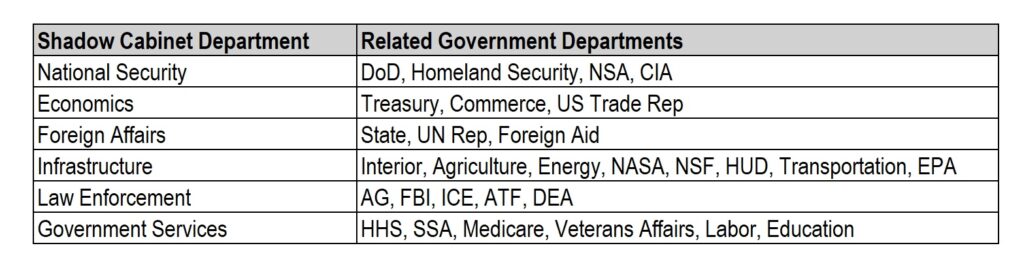
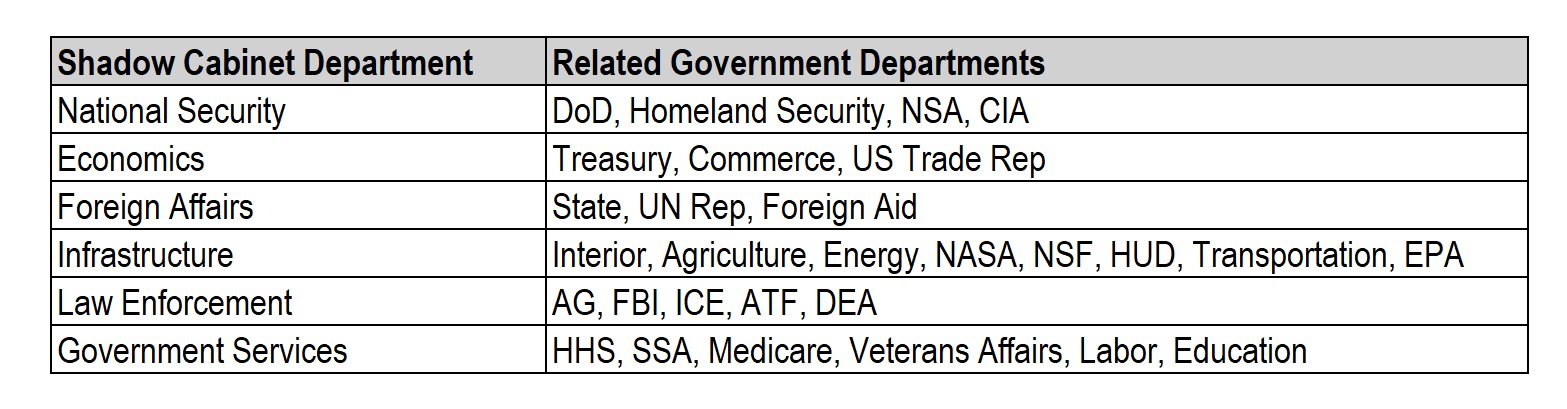
During the recent presidential debate, Trump claimed there were 18 million undocumented immigrants in the U.S.  The most recent government estimate, however, puts that number at about 11 million.  Regardless, Trump is heavily campaigning on a promise of “mass deportations” of undocumented immigrants, utilizing the DEA, ATF, FBI, DHS, and local police forces.

But here’s the thing:  It’s just not going to happen.

Quickly deporting millions of people is a logistical impossibility.  It’s not just putting people on planes.  You have to first identify the millions of people that you want to put on the planes, you have to have a means of monitoring and finding them while they’re “in line”, you have to find the planes you’re going to use, you have to deal with host nations that will need to let the planes land, you have to get appropriate travel documents for everyone, … and THEN you can put them on a plane.

Such a mass deportation would also be astronomically expensive.  The ICE budget for transportation and deportation in 2023 was $420 million and in that year the agency deported 142,580 people.  That rounds to about $3K per person and that cost would logically increase as available logistical resources become scarce at the suggested scale.  But even at a low estimate of $3K per person for the low estimate of 11 million undocumented immigrants, the raw spend alone equates to about $33 billion dollars – or about $10 billion more than the 2024 budget of NASA.

That direct cost doesn’t include the substantial lost government revenues incurred after we’ve deported undocumented immigrants who were paying federal, state, and local taxes and who were contributing to the nation’s workforce and consumer economy.

We also have to consider the lost opportunity costs of using agents from the alphabet soup of agencies mentioned by Trump.  One assumes that they currently have other jobs that would no longer get done.  Also, given the partisan split throughout the country, the federal government would need to fund some means of enforcement and punishment for states and cities that refused to cooperate.

From an international standpoint, let’s also be real.  Few countries are going to let any of our planes land without first cashing a huge check from Uncle Sam.

Finally, I’ll only mention the horrible optics of loading crying children onto planes and splitting up families of mixed status where the children are U.S. citizens.

As I said:  Mass deportations are just not going to happen.

Of course, none of this implies that the U.S. should not have a sane deportation policy, at a considerably smaller scale, for people that deserve to be deported.  But here’s the thing from a political perspective that’s mostly being missed:

The Biden administration has already removed more undocumented immigrants from the U.S. than Trump ever did.

During just their first two years in office, the Biden administration removed over 2.8 million undocumented immigrants.  In Trump’s four years, his administration removed only 2 million people.  Without getting too far into the weeds, one reason that different numbers are tossed around has to do with the difference between “deportations” and “expulsions”.  Deportations require a lengthy judicial process; expulsions (under Title 42) are immediate.  Both, however, result in the removal of someone from the U.S.  While Trump “deported” more people than Biden, Biden “removed” more people than Trump.  The latter, obviously, is the only metric that matters to anyone not playing word games.

Before I step off of this particular soapbox, I will acknowledge that the Biden administration’s removal numbers did recently drop subsequent to a decision to stop using Title 42 to turn back unaccompanied minors who arrive at the border without a parent or guardian.  The GOP is already gleefully using that drop against Harris… and Democrats should take full responsibility.

To those self-proclaimed, self-serving “Christian” politicians who loudly insist that a single-cell American organism is entitled to the full protection of the United States government, but can’t see fit to shield a scared, hungry, foreign-born child who sits at our nation’s border…

Good luck explaining that dichotomy to St. Peter.

Crime

Republicans – and particularly Trump – would have us believe that immigrants are responsible for a massive crime wave in the U.S.

First of all, there is no crime wave.  According to FBI statistics, violent crime (homicide, rape, robbery, & aggravated assault) is now lower than it was in 2020, Trump’s last year in office.  In fact, violent crime is at a 50-year low and is still on the downswing.  My own hometown of Austin, TX saw a 30% drop in violent crime since last year.

Second, placing the blame for the majority of crimes that we do have on immigrants is unsupported by any facts.  While there are certainly individual cases of immigrants committing crimes, those are simply bad actors – and any random group of people has individual bad actors.  Just because one white Republican took a shot at Trump doesn’t imply that all white Republicans are potential assassins.  As a group, immigrants today are actually 60% LESS likely to be incarcerated than U.S.-born citizens.

Third, the GOP seems to have a bucket-full of fabricated stories that they repeat as though they were undisputed facts.  For example:

  • Multiple Republicans, including Trump and GOP House Majority Leader Steve Scalise, have claimed numerous times that foreign prisons are being emptied so that their prisoners can invade the U.S.  Of course, there is zero evidence of any such thing.  If there is anything remotely resembling proof, no one has produced it.
  • The GOP keeps trying to draw a direct connection between illegal immigration and fentanyl smuggling – a connection unsupported by any facts.  A Cato institute study estimated that 93% of fentanyl is smuggled into the U.S. at legal ports of entry by U.S. citizens and, unsurprisingly, 89% of convicted fentanyl traffickers are U.S. citizens.  Less than 0.01% of the people arrested by Border Patrol for illegally crossing into the U.S. possessed any fentanyl whatsoever.

Solutions

Spoiler Alert:  Immigration policy is a tough issue and there are no easy solutions.  Reasonable people could propose reasonable remedies that are diametrically opposed to each another.  I can certainly offer no panacea.  But do you know who tried to find a solution?  Believe it or not, the United States Senate did.

With blessings from leadership of both parties, a bipartisan group led by Sen. James Lankford (R-OK) proposed legislation after months of hard negotiations.  Was it a perfect solution?  Of course not.  Not from my perspective nor even from the perspective of those who wrote the legislation.  It was a compromise solution.  While many Democrats called the deal “unacceptable”, Democratic leadership stood behind the compromise and were ready to push for passage.  Doing something was better than doing nothing.

The legislation, however, went nowhere SOLELY because Trump didn’t want any solution enacted during Biden’s administration.  Trump wanted to campaign on the issue of immigration, and he didn’t give a rat’s ass about any practical consequences for real people.  Sadly, but predictably, Republican leadership in Congress kissed his ring and tanked their own bill.  They wouldn’t even allow it to come to the Senate floor for debate.

Sigh.

Are we as Americans so callous that we can’t treat immigrants like human beings?  Is that who we are?  While we have neither the obligation nor the capacity to house and feed the entire world, can we not show a little compassion to those who make a dangerous trek to our nation’s border seeking only a better life for themselves and their families?  Isn’t America supposed to welcome the “tempest-tossed”?  I seem to remember reading that somewhere.

The details of an immigration solution are well above my pay grade.  However, it seems quite clear that the general contours of any valid solution should include:

  • Streamlined processes and increased capacity to handle migrants who are attempting to enter legally into the U.S.
  • A technology-driven, virtual “smart wall” similar to a bipartisan proposal from 2017.
  • A sane, humane plan for dealing with the millions of undocumented immigrants already living and working in the U.S. who are contributing to our society and economy.
  • A quick, effective means of deporting those undocumented immigrants who are not contributing members of our society.

It also seems quite clear that any valid solution will not involve the MAGA rally applause lines of “Build The Wall” and “Mass Deportations Now”.

Conclusion

My preference would be for our political candidates to concentrate first on issues other than immigration.  However, if Republicans really want to die on this hill, Democrats need to open fire.  They should stop playing defense and mount a frontal attack.  In fact, I’d personally suggest making immigration the SOLE topic of the upcoming Harris/Trump debate.  There is a real problem here deserving of attention and, if the GOP has serious solutions to propose, I’d seriously like to hear them.

However, if Republicans are just going to continue fact-free fear-mongering about black and brown people invading white neighborhoods, taking jobs away from white people, and murdering white people in their sleep, they should at least have the common decency to wear white sheets so that we can more easily see them coming.

Baloney

I thought it might be fun to create and post a series of political parodies based on old commercial jingles.

“Fun” isn’t exactly the word I’d use now.

In fact, I’m now guessing that this series will have a grand total of one post.  Indeed, this single post is only being made in an undoubtedly futile attempt to justify my amateur efforts to-date.  This #$%@ is hard.  Randy Rainbow has nothing to worry about from me.

So, with appropriate apologies to professional parodists, video editors, and Oscar Mayer, here are links to:

Tim Walz

Kamala Harris made her VP choice today — Gov. Tim Walz of Minnesota – and I just streamed their first joint campaign appearance in Philadelphia.

Importantly, Harris looked more comfortable than I’ve ever seen her.  While she certainly took a few jabs at the opposing ticket, she mostly struck a calm, inclusive tone and then introduced Walz to let him have the moment.  Smart politics.

For his part, Walz did fine.  His folksy charm came through and he’ll quickly tighten up what was a somewhat meandering message.  Given that he just found out this morning that he was on the ticket, he deserves a little consideration.

Frankly, I would have written about the advantages of selecting any of final three VP contenders:  Gov. Tim Walz, Gov. Josh Shapiro, or Sen. Mark Kelly.  All were very qualified and each had their own upsides… and downsides.

The major downside to the selection of Walz is that he doesn’t bring a swing state with him.  Harris would have won Minnesota without him.  The upside for Walz?  Well, he really only has that one downside.

His story is quite solid.  Walz grew up in rural Nebraska, working summers on his family’s farm.  After high school, Walz served 24 years in the Army National Guard, attaining the rank of Command Sergeant Major.  (For those unfamiliar with military ranks, a Command Sergeant Major is the highest enlisted rank in the U.S. Army.)  He went to college on the GI Bill, became a teacher, and married another teacher.  They moved to Minnesota where Walz was again a teacher and a football coach who took his team to their first state championship.  Upon entering politics, Walz ran in eight elections and won them all.  He served 12 years in Congress, representing a purple district in rural Minnesota, and had a strong reputation for working across the aisle on the Armed Services, Veterans Affairs, and Agriculture Committees.  He is currently in his second term as the popular Governor of Minnesota.

Walz is effortlessly folksy and affable.  While he looks older, he’s only 60 – one year older than Harris and the same age as Kelly.  Walz may be best described as a “practical progressive” whose political stances don’t seem to piss off any major Democratic constituencies.  That’s an astounding accomplishment.  Walz received immediate, strong VP endorsements from Democrats across the party’s political spectrum, from Rep. Alexandria Ocasio-Cortez to Sen. Joe Manchin.  Both Shapiro and Kelly also quickly offered their full support.

Yes, Shapiro would have brought the important state of Pennsylvania with him and he’s also a good campaigner.  However, Shapiro is a fairly polarizing politician with stances on Israel, school vouchers, and unions that the Harris campaign would have wasted cycles addressing.

Yes, Kelly would have brought Arizona, but that state’s delegate count isn’t a huge help.  Kelly’s background as an astronaut would have certainly been fun to tout on a national stage, but Kelly himself is the least dynamic speaker of the three.

In the end, Walz looks like the best choice that Harris could have made.  His friendliness and good humor should play well on talk shows and on the campaign trail.  His progressive bona fides should help keep younger Democratic voters engaged.  His down-to-earth normalcy should help keep Democratic moderates happy.  And his reputation for bipartisanship may even help attract some disillusioned Republicans.

As I’ve noted before, a Democratic Electoral College win will be a function of Democratic voter turnout in the swing states.  If properly used by the campaign, Walz can help drive that turnout.

Happy Anniversary

While I began sharing my thoughts online way back in 2003, today marks the six-year anniversary of my first post to the ParentheticalPolitics iteration of my blog. Although there have been periods of sparse activity (and there will undoubtedly be more), the blog has seen a ponderous plethora of published political posts.  A copious cornucopia of conceptual compositions.  A lyrical litany of lightly alliterative literature.

Okay, I’m done now.

As noted in my introductory post, the blog’s primary purpose has always been to provide myself with a necessary outlet as the world revolves and evolves around me.  The fact that others have bothered to read my ruminations will forever amaze and amuse me.  I greatly appreciate all of the feedback (both positive and negative!) that I’ve received from my readers through the years.

Thank you.

One housekeeping note:  In the near future, I may be changing the means by which notification emails are sent out upon the publication of new posts.  I use a WordPress plugin to handle that task and it has proven to be problematic at times (as many of you have noted).  I will thus attempt to find a better replacement.  Fair warning that you may get duplicate notifications as I make the necessary changes.

The Harris Campaign

I remain convinced that a Presidential ticket led by Kamala Harris gives Democrats a chance to retain the White House and moves the House/Senate landscapes in Democrats’ direction.  I do, however, feel the urge to throw a wet blanket – or at least a damp one – on the current Democratic euphoria.  Of course I do.

This Sunday marks 100 days until Election Day with even fewer days before the start of early voting.  While European countries manage to conduct their elections quite well within that timeframe, it’s not been the American tradition.  Democrats have a massive amount of work to do within a very compressed calendar.

Harris does inherit the Biden campaign infrastructure, but that is nowhere near the same as building her own infrastructure.  Biden unsurprisingly based his campaign in Delaware – which isn’t exactly home territory for Harris.  Biden also hand-picked his campaign staff with people he knew – people who would speak in his voice and play to his strengths.  It turned out (IMHO) that they were remarkably bad at both of those things, but that’s not the point anymore.  The campaign wasn’t incompetent, but it did seem to insist on using old-style political tactics for a Biden in his 60s.  It was not a winning strategy.

Unfortunately, while Harris had little input into the selection of Biden’s campaign staff, she doesn’t have the luxury of making too many changes to it now.  Not only does she not have the time, but she also can’t afford the bad-will associated with a wholesale campaign reorganization.  People still remember the considerable dysfunction of her campaign during the 2020 Democratic primaries, and no one wants to repeat those mistakes.

Harris can and should, however, bring in her own senior campaign advisors to augment the existing campaign staff.  Here are just a few of the areas of campaign focus where new blood might well be appropriate.

VP Selection

The VP selection process is already in full-gear and it is extremely important.  Not only does the selection itself matter, but it is also Harris’ first major decision that is hers alone to make.  She unfortunately needs to make that choice before August 7 to avoid any GOP games with respect to ballot access in some states.  That’s very quick.

As I previously discussed, MI Gov. Whitmer remains my first choice for VP, and I continue to think that PA Gov. Shapiro would be a good choice as well.  However, I’ve now personally elevated AZ Sen. Kelly to be my second choice.  There are just too many upsides to Harris sharing a ticket with a retired Navy Captain and former astronaut who flew combat missions in the Gulf War and flew four shuttle missions to the ISS.  Take that, guy who wrote “Hillbilly Elegy”.

Also, assuming that Harris does the smart thing and picks a VP that directly helps her collect at least some Electoral Votes, she needs to let her choice have a major say in how the campaign functions within their geographic sphere.  This includes letting the VP choice add at least one senior campaign advisor from their own successful campaign staff.

Platform

Harris is a bit hamstrung as she is still Biden’s VP.  She needs to walk a fine line on policies – taking partial credit for Biden/Harris accomplishments while still establishing her own positions that may differ from Biden’s.  For example, she should probably let Biden lead the parade to convince Netanyahu to sign a Gaza cease-fire while positioning herself as less willing to write Israel a blank check if she wins the presidency.

Given the short timeframe, I’d still recommend that Harris try to stay out of the weeds on the major issues – staking out broad policy positions while mostly promoting Truth, Justice, and the American Way.  She doesn’t need to be championing specific CO2 emission levels nor pressing for specific Chinese tariffs.  She needs to be a sane, competent, uplifting, inclusive alternative to the convicted felon.

Social Media

There is no reason that the Harris campaign shouldn’t OWN social media, particularly as a means of connecting with younger voters. Harris isn’t a youngster herself, but she’s two decades younger than Trump.  The campaign may already be off to a good start here, but they need to identify some Gen-Z hotshot to lead this parade and drown out Trump’s electronic diarrhea.

Traditional Media

The Harris campaign does still need a robust conventional ad strategy, but those ads need to be targeted to specific markets and demographics.  At least some of these ads – FOR THE LOVE OF GOD – need to display a sly sense of humor.  Well-produced ads can get away with so much more with a little wit behind them.  Also, a touch of self-deprecating humor can take Trump’s best attack lines and turn them to her favor.

While some Harris attacks ads are appropriate, it’s the fun ads that are more likely to get shared on social media and replayed on traditional media for free.  Free is good.

Debate Prep

I’d make an exception here.  Whoever led Biden’s debate prep needs to be fired.  If I was running the Harris campaign, I’m not sure I’d even bother with a debate.  I have no doubt that Harris would win a fair debate against Trump, but if Fox is sponsoring it, it won’t be fair.  I don’t see how a debate helps Harris with swing-state voters and, frankly, it’s not worth the necessary prep time.  She has better things to do.

Data Analytics

Sure, I may be a bit biased on this point, but the Harris campaign absolutely needs to make data analytics a major focus.

Harris has opportunities to expand Democrats’ advantages with college-educated voters, young voters, female voters, Black voters, Latino voters, and undecided voters.  Unfortunately, it’s not a one-size-fits-all problem.  It’s also not a “gut-feeling” problem.  It’s a data analysis problem.

Targeting each specific group in specific counties in specific swing-states requires detailed analyses of multiple sets of voter data.  I suspect that the DNC has most of the necessary data, but I also suspect that the Biden campaign has not made any serious analysis of that data a priority.  That needs to be corrected now.  I’ve heard rumblings of bringing back some of the team that helped the Obama campaign in this regard.  That may be fine, but the technology they used to great effect is now almost two decades old.  The Harris campaign needs to make sure they’re not migrating to only slightly newer methodologies.  This is another arena where new blood can act very quickly with the latest technologies.  There are good companies that do this as a business.  They need to find one.

I’ll eventually try to re-collect the necessary data for my own amateur attempt at analytics related to the Presidential, Senate, and House races, but I need to let things settle a bit before I start that tedious process.  In particular, I want to wait until after Harris picks her VP.  The Harris campaign, however, should be running simulations with each possible VP candidate prior to a selection.

In any case, data needs to be the driving force behind swing-state campaign strategies, particularly with respect to publicity and Get-Out-The-Vote efforts.

Regional Managers

To that end, the Harris campaign likely needs four distinct campaign strategies.  There is, of course, the overall campaign which will likely be a slightly updated version of the Biden campaign.  While this national organization would function as an umbrella and would be directly responsible for the blue states, there are also three swing-state regions that would seem to merit their own independent strategies.  It is in these regions that Harris may need to refocus campaign efforts and where some new senior advisors could undoubtedly help.

The three regions of swing-state interest are:

  • The Rust Belt states of Pennsylvania, Michigan, & Wisconsin with 34 Electoral votes.
  • The Western Sun Belt states of Arizona and Nevada with 17 Electoral votes.
  • The Eastern Sun Belt states of Georgia & North Carolina with 32 Electoral votes.

What works well in one region won’t necessarily translate to others.  The Harris campaign needs political strategists that truly understand each region and its voters.  These people must have proven histories of winning statewide elections in the regions.  The Biden campaign might already have one or more of these; they might not.  But they are necessary, nonetheless.

Within each region, each state has their own voting requirements, their own early-voting processes, their own media landscapes, and their own nuances for organizing on-the-ground efforts to get Democratic voters to the polls.  The regional managers need to have the power and resources to essentially run their own mini-campaigns – coordinating with the national campaign for scheduling and budgets and with existing party organizations in each state. A centrally-controlled campaign can work perfectly fine, but the Harris campaign just doesn’t have the time to build one.

The regional managers would be in the best position to quickly determine what joint appearances and campaign coordination make the most sense with the various Governors, Senators, & Representatives in the swing states – including popular sitting Democrats and Democrats concurrently running for office this year.  Trump doesn’t seem to care much about his party’s success; he’s only worried about his own.  Democrats need a much broader focus.

Rapid-Response Team

At the risk of being a black cloud, some unfortunate event is likely to happen before the election.  It may be related to an overseas conflict, a natural disaster, a mass shooting, a terrorist strike, a stock market plunge, or a localized riot.  It will hopefully be something considerably less major than these possibilities.  In any case, it’s best to be ready.  While an appropriate agency of the Biden/Harris administration will hopefully be on top of an actual disaster response, the Harris campaign needs to be able to independently respond as well.  While it can’t plan the response itself, it should identify and pre-fund a rapid-response team with direct, real-time access to Harris.

MONEY

The above are just the things that occur to me!  I may be a bit of a political junkie, but running a campaign is certainly not in my wheelhouse.  I’m sure I missed something important.  The Democratic political class needs to get their act together, avoid in-fighting, follow Joe Biden’s lead, and devote themselves 100% to defending democracy in November.

The best assistance that we mere mortals can provide at the moment is to help fund the campaign’s efforts.  The next deadline for Federal Election Commission reports is July 31.  Campaign donations made on or before that date will be reported to the FEC and that fundraising number is the one that gets the most media attention as indicative of a campaign’s strength.

I’ll update my previous target suggestions for Senate and House races at a later date.  For now, however, you can (and should!) donate directly to the Harris campaign via the ActBlue links on the campaign’s website.

Next Steps

My previous post apparently convinced Biden to drop out of the Presidential race.  You’re welcome.

So now what?

It appears that VP Harris will be the new Democratic nominee.  She was immediately endorsed by Biden and numerous other party leaders.  No one has yet volunteered to challenge her and even those of us who would prefer another candidate haven’t suggested that they wouldn’t support her.  Let’s just call it done.  Harris will be the new Democratic nominee.

With Harris at the top of the ticket, the basic electoral map doesn’t immediately improve for Democrats.  Harris does, however, stop the hemorrhaging.  At least for the moment.  Democrats, led by Harris, have a major opportunity to restart this election season, motivate their voters up and down the ballot, and dominate a month of news cycles until the Democratic National Convention on August 22.  Not that Democrats couldn’t easily squander this opportunity.  Unfortunately:  Yes We Can!!

First, let me quickly dismiss the notion that a ticket change is somehow illegal (as recently suggested by House Speaker Johnson).  It’s not.  There will most definitely be numerous legal challenges, but they will have no basis in law.  The party nominating process is a political construct, not a legal one.  If party rules disallow something, the party can simply change those rules. Legally, until the nominating convention, Democrats can do whatever they want.  There are one or two exceptions where state laws require candidates to be named a bit earlier, but those are all red states.  Any efforts to keep Harris off the ballot in red states – even efforts that eventually fail – would give Democrats a ready-made campaign issue (“Republicans fight against Democracy!”) while giving Republicans zero potential electoral upside. I don’t think even our partisan SCOTUS would find a majority to support keeping Harris off of any state ballot (although 2 to 4 votes would be more than happy to simply declare Trump the winner right now).

Second, I’ll suggest that Harris has to come out of the gate with some solid policy proposals.  They don’t have to be immediately detailed, but she has to position herself as her own person.  She can’t just say that all of Biden’s policies are peachy keen with her.  In my opinion, she also has to strike a conciliatory tone to try to unite America.   She can’t; but she has to try.  The top of the Democratic ticket shouldn’t be constantly negative.  Her speeches need to be all freedom and apple pie, leaning into her own backstory.  Harris needs to let surrogates, led by her VP pick, be the campaign’s primary attack dogs.

Which brings me to her choice for Vice President.

It’s not in Harris’ interest to immediately name her VP pick.  A ton of names have already been floated and pundits have been tripping all over themselves trying to handicap the choices.  I’m about to do the same.  Harris should let the news cycles speculate all they want and keep Trump/Vance as a secondary story.

From my perspective, the Democratic VP selection is a math problem.  Period.  Democrats already know the Republican choice and Vance brings next to nothing to their electoral count.  He’s not well-known outside of his home state and Ohio was already solidly red.

I’ll eventually get around to another detailed analysis of the Electoral College.  It’s tough to do serious analytics when the world is moving so fast.  In the meantime, I’d hazard to guess that a current Harris/TBD vs. Trump/Vance map looks remarkably similar to the Biden/Harris vs. Trump/TBD map that I described in mid-April. The trick now is to see how a Democratic VP pick might tilt that map toward Democrats.  Nothing else matters with respect to the VP choice and everything else is noise.  As a high school math teacher used to scream at us if she thought our minds were wandering:  “Is it math?”  If a pick doesn’t demonstrably help Harris get to 270 electoral votes, it’s not at all interesting.

Let’s examine a few choices.

While I’d personally prefer to have MI Gov. Whitmer at the top of the Democratic ticket, I’ll stand by my previous support for a Harris/Whitmer ticket.  An All-Woman ticket would be historic and would provide a massive contrast to the Republican All-Rich-White-Idiot ticket.  Whitmer has said she doesn’t want to be VP, but she needs to be convinced.  She wants to be President someday and, win or lose, this race would give her the national exposure that she currently lacks.  Most importantly, she moves MI to solid Democratic; WI and PA to Lean Democratic.  Even just those three states, in addition to the states I previously put in the Solid or Lean Democratic column, give Democrats exactly 270 electoral votes.  That’s a win, but it’s way too close.  In this scenario, I’d cede FL to Republicans, make sure the Lean Democratic states stay that way, spend some money in GA and NC, and concentrate on adding NV and/or AZ as a cushion:

Democrats actually have an impressive bench, but other VP choices aren’t as solid from an electoral standpoint.  In descending order of my preference after Whitmer, here’s a few options:

  • PA Gov. Josh Shapiro has a bright future, but he might not be ready for the national stage.  He would move PA from Toss Up to Solid Democratic. He might also help move WI and MI to Lean Democratic – just not as much as Whitmer.  Still, the math looks similar to Whitmer’s, making Shapiro a decent backup choice.
  • AZ Sen. Mark Kelly would make an excellent VP, but he doesn’t help enough from an electoral standpoint.  His Democratic Senate seat would unfortunately become vacant if a Harris/Kelly ticket won, but the Democratic AZ governor would at least appoint a Democrat for a two-year term.  Kelly could move AZ and NV from Toss Up to Lean Democratic, but that only puts the Solid+Lean Democratic number at 233 – which isn’t nearly enough.  This ticket would have to move a few more Toss Up states to win the election.  Interestingly, though, Kelly’s background as an astronaut gives him some history in FL and TX.  That background wouldn’t be enough to win either state but could be very useful for fund-raising and it could force Republicans to spend some money there to counter him.
  • NC Gov. Roy Cooper does have a history of winning in a Republican state and he could move NC from Lean Republican to Lean Democratic.  However, that’s about all the help he gives the ticket.
  • KY Gov. Andy Beshear also has a history of winning in a Republican state, but he likely wouldn’t even carry KY in a Presidential election.
  • CA Gov. Gavin Newsome, IL Gov. J.B. Pritzker, and NJ Gov. Phil Murphy, all good people from solidly Democratic states, bring little to the electoral count.
  • Secretary Pete Buttigieg would make a great VP and an exciting candidate, but he wouldn’t carry his home state of IN.  Sadly, he even likely moves the rust belt swing states from Toss Up to Lean Republican.

Dear Democrats:  This is way too important and you now have a chance.  Please don’t screw it up.

The Presidential Ticket

Democrats need a new Presidential ticket.

Initially, I was adamantly opposed to a change and I even chided many of my friends for over-reacting to the debate fiasco and for feeding a Republican narrative.  However, as I’ve considered reality – and the data supporting that reality – I have re-examined my initial knee-jerk opposition.  Yes, that’s right.  I changed my mind.  Mark your calendars.

I’ll expand on my epiphany in a moment.  First, however, please allow me a slight digression…

The Republican Candidate

I’ve often accused the vast majority of Republicans of backing Trump regardless of any and all facts.  I haven’t changed my mind about that.

I don’t even need to discuss the numerous issues I have with Republican policy positions.  I can accept that reasonable people might have vastly different political opinions than the ones that I personally favor.  Trump himself, however, is not a reasonable person.

The man has denegrated the sacrifices of American soldiers, derided American prisoners of war, mocked disabled people, cheated on his pregnant wife, incited a mob to storm our nation’s capitol, bragged about grabbing women’s vaginas, verbally attacked the spouses of his adversaries, and sold branded Bibles for personal profit.  I could easily go on. And on. And on.

Trump is everything that mothers teach their children not to be: a petty, immoral, narcissistic, uninformed bully.  He is the embodiment of megalomania: a twisted amalgam of the worst traits of Iago, Bill Sykes, Sauron, Mr. Potter, Jabba the Hutt, and Voldemort (although most of these fictional villains were written to possess considerably more intelligence).

He has villainized immigrants to the point that I’ve been reminded of an interview that Gustave Gilbert conducted with Hermann Goering, former Nazi Reichsmarshall, in Goering’s Nuremberg cell in 1946.  Gilbert pointed out that, in a democracy, the people have a voice in their government.  This was Goering’s response:

“Oh, that is all well and good, but, voice or no voice, the people can always be brought to the bidding of the leaders. That is easy. All you have to do is tell them they are being attacked and denounce the pacifists for lack of patriotism and exposing the country to danger. It works the same way in any country.”

Yes, it apparently does.

While there was once some hope that our judicial system might save us from Trump, that hope is now gone.  The federal election interference case is toast, the Georgia election interference case has been paused, the classified documents case has been completely thrown out, and, of course, the insane SCOTUS presidential immunity ruling gave Trump a Get-Out-Of-Jail-Free card for anything and everything.  Trump has thus managed to dispose of his outstanding legal issues based mostly on rulings from judges that he personally appointed.  While some cases are pending prosecutorial appeals, there is little hope of success given Trump’s control of the Supreme Court.  At the very least, there is now a zero chance that any of these cases will make it to trial before the November elections.

Not that it matters.  While Trump was convicted of 34 felony counts of fraud in New York and was found liable for sexual assault in a civil trial, Republicans cannot be convinced to escape the cult that was once a proud political party.

Thus, a truly vile human being is now the Republican nominee for President of the United States.

Which brings me back to….

The Democratic Candidate

Our only hope now is that Democrats can retain the White House.

I personally think that Biden has done a good job as President.  Others may disagree.  However, on a personal level, the difference between the two candidates is readily apparent:  Joe Biden is a decent person; Donald Trump is not.  It’s really that simple.

That said, I cannot in good conscience accuse Republicans of blindly supporting their candidate while I concurrently refuse to see any issues with the Democratic candidate.  And I do have issues.  Post-debate conversations regarding a Democratic ticket change were squeezed out of the headlines by recent events.  Those conversations need to be revived.

I’m only moderately concerned about Biden’s debate performance – although that was definitely tough to watch.  I wouldn’t claim to be an expert, but I do have some personal exposure to people with Sundowner’s Syndrome.  Biden seemed to be exhibiting some related behavior during the debate, most notably late-day confusion.  However, Trump has demonstrated similar behavior.  Both are old men, neither are exactly at the top of their game, and arguing about which candidate is less mentally challenged isn’t how we should be choosing the President of the United States.

I’m more concerned about the truly horrible campaign that Biden has run thus far.  He has an impressive resume upon which to run but he’s not getting that message out.  His campaign seems to expect him to be a much better communicator than he is.  Biden is simply not a great speaker and he never has been.  A good campaign would play to Biden’s strengths with well-produced, recorded political ads with a touch of humor.  Surrogates should be doing the heavy lifting at rallies.

I’m most concerned about the electoral math.  I no longer believe that Biden can win a second term.  Sure, the election isn’t until November and things can always change.  However, at this point, I don’t see a reasonable path to 270 electoral votes.  Winning the undecided voters is a great goal but it’s less important than people think. There just aren’t that many undecided voters in the swing states.  Democrats already have a solid base that certainly doesn’t like Trump but they’re also not particularly excited about their own candidate.  The whole game is swing-state turnout and Biden is making his voters less engaged every single day.  It’s not that they’ll vote for Trump; they just won’t vote.  And that’s just as bad.  Furthermore, Biden could not only lose all of the swing states; it currently appears that he could lose a couple of blue states as well.

Also concerning is the impact of a weak candidate at the top of the Democratic ticket on down-ballot races.  It’s probable that a landslide loss by Biden would be accompanied by a Democratic loss of the Senate and would make a Democratic takeover of the House impossible.

A new ticket would be a hard reset.  It would give all Democrats a reason to be excited again and would leave Republicans feeling like they’re stuck with yesterday’s leftovers.

The process of changing the ticket isn’t hard and there’s still time to do it.  However, the only way this works well is if Biden voluntarily steps aside before the Democratic National Convention on August 22.  While he’s made it quite clear that he doesn’t plan to do that, Biden’s not an idiot and he’s not immune to reality.  If enough folks can get past Biden’s inner circle (mostly Jill) and convince him that he has no chance of winning, I do believe that he’ll do the right thing.  The message to Biden isn’t “You’re old and feeble.”  The message is “You’re a patriot and it’s time.”

Everything would start with Biden issuing a brief statement, such as:

“While I continue to believe that I could win a second term, I acknowledge the voices of Americans that are ready for the Old Guard to pass the torch of governance to a new generation of leaders.  I have always put my country above my own personal desires and I will continue to do so.  To that end, I am withdrawing my name from consideration as the 2024 Democratic nominee for President of the United States and I will provide whatever support I can to the Democratic candidate chosen to succeed me.  For now, it remains my honor to serve as your President.  God bless you and God Bless America!”

Then the fun starts.  We don’t have time to hold new primary elections, but then, we never really had them.  It was a foregone conclusion that Biden was going to be the Democratic nominee.  However, no one actually voted for a candidate; they voted for a slate of delegates that would choose a candidate.  While they are pledged to Biden, that pledge is void if Biden withdraws.  In that case, the DNC becomes an actual nominating convention as opposed to just a media event.  There may be some drama, but that will only serve to drive viewership and interest.  In the end, Democrats would come together to support a new ticket to defeat Trump.

Of course, Biden should then be given the prime-time nominating speech at the DNC to formally pass the torch to the new nominee in front of a national TV audience.  Biden then goes out as an Elder-Statesman Extraordinaire and Democrats get a campaign jumpstart.  Win-win!

So who should be on the new ticket?  Party leaders, including Biden, will hold a lot of sway over the DNC delegates.

The obvious choice for the top of the ticket is Kamala Harris.

Biden’s campaign money would simply transfer to Harris since her name is on the current ticket.  That shouldn’t be a deciding factor, though, since the money could otherwise be transferred to a PAC and/or major donors could have their money refunded to be re-contributed to a new campaign.  Also, a new ticket would open the floodgates for new campaign donations.

Of greater concern would be the horrible optics of jumping over a black woman to lead the ticket.  That scenario would only work if Harris was full-throated in her support of an alternative candidate.  She might be convinced to do so with an unspoken agreement that a new Democratic President would give her a plum ambassadorship and would then nominate her for the first Supreme Court opening.

While Harris would be the likely candidate, my personal choice would be Michigan Gov. Gretchen Whitmer.  She’s smart, well-liked, and is a great campaigner.  She would also eat Trump’s lunch in a debate.  Most importantly, she would likely bring Democrats two swing states: Michigan and neighboring Wisconsin.

For either Harris or Whitmer, I’d pair them with another woman as the VP candidate.  That would highlight Trump’s choice of J.D. Vance as just another rich white guy and it would reward a major Democratic constituency.  Whitmer would be an excellent choice for Harris’ VP.  For Whitmer, my choice would be Susan Rice (former UN ambassador, National Security Advisor, Domestic Policy Advisor, etc.).


Do let me be clear:  The two candidates we have at the moment are not equally bad.  I’d prefer another option, but I’ll certainly vote for Biden if he’s the Democratic candidate.  In a perfect world, our choices would be between filet mignon and prime rib.  However, in our world, it’s not that difficult to choose between ground beef and horse manure.