The Politics of COVID-19

While the World Health Organization hasn’t yet categorized the COVID-19 coronavirus outbreak as a pandemic, that’s just a formality.  It is a pandemic.

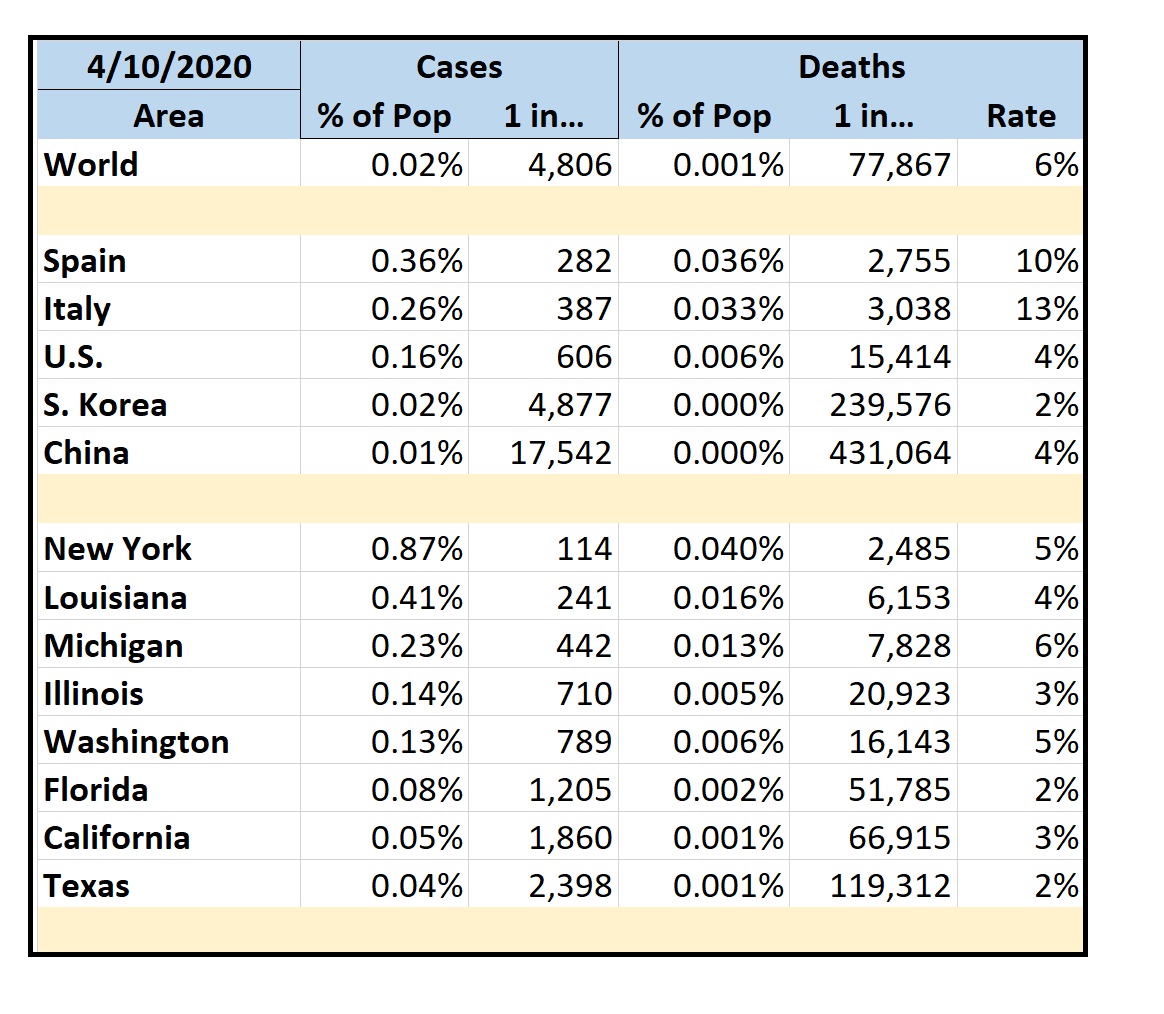
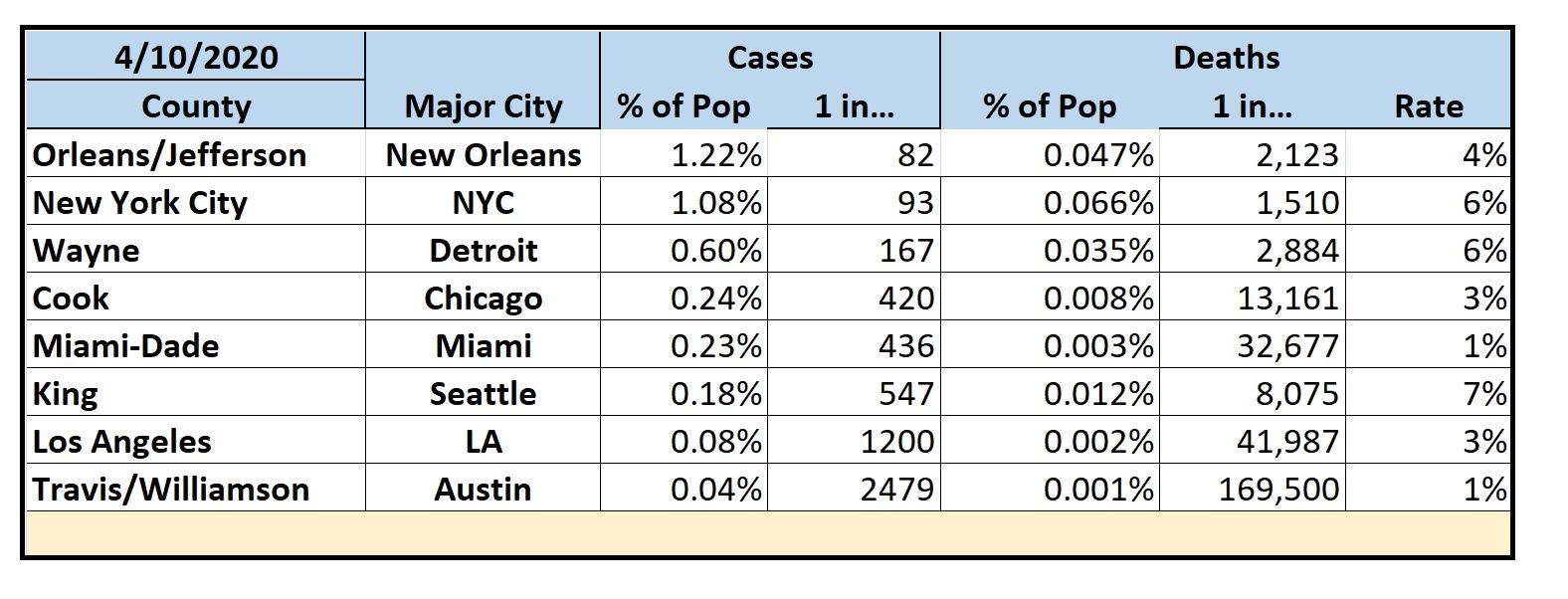
As of this writing, there were 90,933 cases in 76 countries resulting in 3,120 deaths. In the U.S., there were 103 reported cases resulting in 6 deaths.  All of these numbers will get much worse before they get better.  For those so inclined, here’s a helpful (but rather depressing) website with up-to-date COVID-19 statistics.

Since this is a political blog, let me explicitly state what should be patently obvious:  COVID-19 doesn’t have a political agenda.  As much as I might like to blame it on Trump, it’s not his fault.  Likewise, the associated stock market drop wasn’t his fault, either.

But here’s the problem.  Trump and his minions have gone out of their way to make this a political issue.

While loss of life should be a more pressing concern, Trump has been mostly focused on the economic (and thus political) impact of COVID-19.  In efforts to prop up the stock market, Trump has been clearly downplaying the outbreak with various distortions and outright lies.  Over the course of just a week, he has floated numerous approaches.  He’s claimed that it’s a Democratic “hoax” with no explanation whatsoever.  He’s claimed that everything is under control in the U.S. when it clearly is not.  He’s claimed that a vaccine and/or a cure will be available within a few months when experts say nothing will be available for at least a year and a half.  He’s claimed that the virus will probably die out in the warmer April timeframe while experts say otherwise.  In short, Trump doesn’t know what he’s talking about – which isn’t exactly breaking news.

Concurrently, Trump’s enablers have been even worse.  A GOP House candidate is pushing a theory that Democrats created the virus.  Sen. Tom Cotton opined that the virus was a man-made Chinese bio-weapon.  Rush Limbaugh, the newly Trump-minted Presidential Medal of Freedom recipient, repeated Cotton’s theory while also claiming that “the coronavirus is the common cold” and an anti-Trump conspiracy.  Larry Kudlow, Trump’s National Economic Council Director, claimed that the virus was “contained” in the U.S. and “pretty close to airtight” – whatever the hell that meant.  Trump Jr. actually claimed that Democrats want millions of people to die just to bring down his father.  And then, to top it off,  Vice President Mike Pence defended the Republican rhetoric as “justified”.

Thus, while it’s sad that COVID-19 is even a valid topic for a political blog, I’ll reluctantly take a look at it from a political perspective.

Let’s first get the stock market out of the way.  I personally took a rather large financial hit recently, so I’m not exactly thrilled.  However, the market is going to do what the market damn well wants to do, largely regardless of who happens to be in the White House.  To my mind, there is only one reason that the stock market is a political issue.  Since Trump has loudly and repeatedly claimed full and personal credit for the bull market since his election, it only seems fair that he should take full and personal blame for a bear market.  I’m simply not accepting alternative viewpoints here.

So now to the real issue.  The handling of a national health emergency is clearly the responsibility of the executive branch of our government and this administration’s preparation and response to COVID-19 has been clearly pathetic.

Trump made massive budget cuts to the CDC – the agency tasked with leading our nation’s response to health emergencies such as the one we’re currently facing.  In defense of those cuts, Trump said, “I’m a businessperson.  I don’t like having thousands of people around when you don’t need them.”  By Trump’s logic, perhaps we should disband the military until we need to send someone to a war zone.

Those CDC cuts had a cascading effect on the agency’s response to COVID-19.  Until just recently, only a very small number of laboratories were enabled to run tests for the virus.  Worse still, the testing kits that were initially sent out by the CDC had a faulty component.  Thus, the number of COVID-19 cases in the U.S. is likely much higher than is currently being reported.  HHS Secretary Alex Azar initially denied that the test kits were faulty despite a concurrent statement by the CDC admitting otherwise.  The administration’s response wasn’t to transparently correct the misinformation but rather to clamp down on all statements made by non-political appointees.  Of course it was.

Such incompetence has been rampant.  In my home state of Texas, the CDC mistakenly released a woman from quarantine who tested positive for the virus.  They didn’t get her back until after she’d potentially spread the virus at a busy mall.  This was such a massive display of stupidity that even our very Republican governor complained.

Trump & Company have also been less than helpful in their characterizations of COVID-19.  It is most certainly not the common cold and it is considerably worse than the flu.  COVID-19 currently appears to have a mortality rate of 1-2 percent.  While that might not seem particularly high, it’s 10-20 times the mortality rate of the flu.  Furthermore, the fact that some 80% of people infected with COVID-19 will only experience minor symptoms only means that those people will likely continue to go about their daily routines spreading the virus to others.

Even a relatively minor outbreak of COVID-19 could easily overwhelm healthcare facilities and experts have warned that a coronavirus pandemic could eventually impact 40-80 percent of the world’s population.  If we assume a U.S. population of 331 million people, a 40% infection rate, and a 1% mortality rate, we’d see 1.3 million COVID-19 deaths in the U.S. alone.

And, finally, as the icing on this virus-infected cake, Trump appointed Mike Pence to head up the Coronavirus Task Force.  Our national effort to confront a worldwide pandemic is being led not by an expert in the field, but by an anti-science Trump acolyte who, as governor of Indiana, oversaw a truly horrific response to the largest HIV outbreak in that state’s history.  Just yesterday, Pence claimed “the risk remains low” with respect to COVID-19.  So there you have it.  I guess there’s nothing at all to worry about.

Sure, Democratic lawmakers have been pointing out all of the above to hold the Trump administration accountable.  That’s their job.  They’re not creating the narrative and they’re not claiming that Republicans want people to die.  They’re simply pointing out that the Trump administration isn’t doing its job.  That’s just a fact.  Nevertheless, Democrats are cooperating with the Trump administration’s emergency CDC funding requests despite the fact that Democrats wanted the CDC funding in the budget in the first place.

Of course COVID-19 will be an issue in the 2020 general election.  It should be.  This is the first real crisis that the Trump administration has had to address.  If they somehow have things under control by November, then they may deserve some credit.  If they continue to mismanage the pandemic, then they need to answer to the voters.

Until then, however, a pandemic isn’t a political football.  I don’t want to hear the Trump administration’s opinions about the direction of the stock market, I don’t want to hear how Democrats are somehow to blame, and I don’t want to hear COVID-19 status updates from career politicians.  In fact, I don’t want politicians anywhere near the podium when experts in the field calmly present all the facts and lay out exactly what steps are being taken.

I’m just not holding my breath.  Although perhaps I should be.

Memories of 1972

In the midst of the 2020 election season, let’s take a brief trip back in time to the 1972 election season.

Almost a half century ago, a very large number of Democratic candidates emerged to take on a Republican President running for his second term.  The President’s reputation for unethical behavior made him a possible target despite a strong economy.  The Democratic field included a former Vice-President, a centrist establishment preference, the first minority woman to run for a major party nomination, multiple Senators, multiple Governors, and multiple Mayors.

A far-left Senator took full advantage of both the ensuing chaos and recent rules changes in the Democratic nomination process.  These rules changes had been largely led by that same Senator after his failed attempt to win the nomination four years prior.  The Senator mobilized an enthusiastic grass-roots base of young voters by calling for single-payer health care and income equality.  This base won him good placement in many early-state caucuses and primaries.  These, in turn, managed to push many of his competitors out of contention even before much of the nation had a chance to weigh in.

Sounds just a tad familiar to this point, huh?

Spoiler Alert:  That Senator, George McGovern, did eventually win the Democratic nomination of a divided party over Hubert Humphrey, Ed Muskie, and many others.  McGovern then proceeded to lose 49 states to Richard Nixon in the general election.  Concurrently, the McGovern-led ticket caused Democrats to lose twelve seats in the House and two seats in the Senate.

To be sure, the political landscape has changed significantly since the 1970s.  Given today’s polarization, Senator Bernie Sanders would be in no danger whatsoever of losing the solidly Democratic states in the general election.  California and New York won’t vote for Trump under any circumstances.  In fact, recent polls suggest that Sanders could well win the nationwide popular vote over Trump.  Unfortunately, that’s not how we elect a President.  The Electoral map paints an entirely different picture.

Indeed, as I noted in my previous post, most states simply aren’t in-play this year.  There are only eleven states that matter at all.  Only four of those are true toss-ups (Wisconsin, Michigan, Pennsylvania, and Arizona) and another seven states lean Democratic but aren’t slam-dunks.

Early head-to-head polling of a Sanders vs. Trump contest in the above states is sparse and, at this point, undoubtedly favors Sanders.  Trump hasn’t yet concentrated his fire on an individual Democrat and, in a possible indication of his preferred opponent, Trump has largely stayed away from directly attacking Sanders.

That said, the existing polls do have Sanders ahead in nine of the eleven in-play states, with Trump ahead in only Wisconsin and Arizona. The problem is that even this extremely rosy picture isn’t quite rosy enough.  Adding just Wisconsin and Arizona to the states I’ve already conceded to Trump gives him 270 Electoral votes – which is exactly enough to win the election.

Trump’s current base would likely be very motivated to turn out against Sanders.  The Republican campaign script in the swing states is pretty clear:  Sanders is a self-proclaimed socialist running to be President of the world’s leading capitalist democracy; Sanders himself is a multi-millionaire with three houses – which makes him more of a hypocrite than a socialist; Sanders had recent heart issues but won’t release his medical records after promising he would; Sanders hasn’t a clue how to pay for Medicare-For-All nor how to deal with the economic hit we’d take by killing the health insurance industry; etc.

Another big concern is the probable impact of a Sanders-led ticket on down-ballot races.  The fact that Republicans will mostly find themselves defending Trump is a Democratic advantage that is neutered if Democratic candidates find themselves having to defend Sanders.  At the moment, Democrats are favored to keep the House and Republicans are favored to keep the Senate.  A Sanders-led ticket makes the House a much tighter picture and puts the Senate completely out of reach.  And, of course, there are tons of state and local races that would be similarly impacted.

Yes, it’s possible that Trump’s base would be slightly diminished given Trump’s many ethical lapses.  It’s possible that Democrats would come together to fully support a Sanders candidacy.  It’s possible that Sanders’ VP selection wouldn’t repeat McGovern’s Eagleton/Shriver disaster.  It’s possible that the Democratic base would be motivated to turn out to vote against Trump even if they’re not thrilled with Sanders.  It’s possible that Sanders’ enthusiastic base would bring out enough new Democratic voters in the key states to overcome Trump’s enthusiastic base.  It’s possible that I just bought a $70M lottery ticket.

It’s still too early in the primary season to panic.  Despite the media’s attempt to crown Sanders as the nominee, only 2.5% of the Democratic delegates have been selected to-date.  However, if history continues to repeat itself, Sanders could win the nomination.  If so, my best guess is that Sanders would lose the Electoral College by a much smaller margin than McGovern did – but he’d still lose.  And he’d take a whole lot of people with him.

“Those who fail to learn from history are condemned to repeat it.”
– Winston Churchill, 1948

The 2020 Ticket – Status

As much as I enjoy being right, there are times that I would dearly love to be proven wrong.  Unfortunately, many of my old blog posts appear to be sadly prophetic.

The Democratic nominating process is convincingly demonstrating that it wasn’t designed to pick a nominee that can actually win the general election.  Iowa was a horrible way to start things off.  Given the largely unchanged Electoral landscape, a moderate at the top of the ticket running a “Middle America” campaign remains the best Electoral strategy to unseat Trump.  However, Democrats are allowing Iowa and New Hampshire – representing 1.6% of the Democratic convention delegates and not representing anything remotely similar to the in-play 2020 voter pool – to push the party into a doomed “Progressive Left” or “Young Turk” strategy with candidates that have Team Trump salivating.

<sigh>

Let’s review where things currently stand for 2020.

At this point, I’m spotting Trump 248 Electoral votes from 20 states.

The 248 votes covers all states that are solid Republican strongholds and all states that lean Republican.  There is no candidate in the entire Democratic field that can flip any state that would naturally favor a Republican – even if his name is Donald Trump.   The 248 also includes the technically swing states of Iowa and Florida.  My write-off of Iowa reflects current polling data and the fact that Iowa Democrats have proven to be incompetent and prone to eating their own.  My concession of Florida is largely based on recent Republican victories in the state, complete Republican control of the state, and the fact that Florida is an extremely expensive media market.  Florida will likely be too steep a hill for any Democrat to climb in 2020.

That 248 Electoral vote total is only 22 votes short of a win.  Sad, but true.

On the other side, Democrats have 182 Electoral votes in the bag regardless of the nominee.  Frankly, with a “D” after my name, I could win every one of these 13 states in the general election. I wouldn’t win by huge margins, but I’d end up with the same 182 Electoral votes that someone with 99% of the popular vote would get.

There are another 51 Electoral votes in another 7 states that will probably vote for the Democratic nominee.  These states include Nevada, Colorado, New Mexico, Minnesota, Virginia, New Hampshire, and Maine.  While they could swing away, Hillary Clinton managed to carry every one of them in 2016 running an abysmal campaign.  Trump’s folks have already begun targeting most of these states to try to pad their 2020 margin.  However, many (but not all) of the current Democratic field should be able to carry these states with some reasonable effort.

The above gives Democrats a starting point of 233 Electoral votes – 37 votes short of a win.

All of this leaves four states – Wisconsin, Michigan, Pennsylvania, and Arizona – with 57 combined Electoral votes that will decide the 2020 election.  If Democrats can’t nominate someone that can carry at least three of these four states, they have no prayer of winning.  It’s not quantum physics.  Democrats need a candidate that can bring out Democratic-leaning voters in these states and/or can give Republicans-leaning voters in these states an excuse to stay home.

Trump won all four of these true swing states in 2016 and he has a decent shot to win all four again in 2020.  If he does, he wins the election.

Each of the states has their own individual demographics, but there are some commonalities.  In particular, the voting population of Wisconsin, Michigan, and Pennsylvania are generally centrist – neither ultra-liberal nor ultra-conservative – and all have significant working, middle-class, blue-collar populations.  They are true “heartland” voters.

So, here’s my quick take at how the major candidates play in these heartland states.  They combine for 46 Electoral votes – enough to give a Democrat the win (assuming he or she can also retain the states that Clinton won in 2016).

  • Bernie Sanders:  His socialist history just isn’t going to fly in the heartland.  Democrats have largely avoided Sanders’ past.  Trump won’t.  Sanders would lose all three heartland states and he’d probably lose a few of the states that only lean Democratic.  Sanders might be able to pull off a slight majority of the overall popular vote, but he’d be slaughtered in the Electoral College.  He’d lose to Trump.
  • Pete Buttigieg:  It pains me to say this, but the reality is that the 2020 heartland voter simply won’t vote for a gay guy.  They’ll say it’s because of his lack of experience; it’ll be because he’s gay.  Buttigieg would lose all three heartland states.  He might lose a few other states due to his lack of experience.  In any case, he’d lose to Trump.
  • Elizabeth Warren:  She’ll scare a lot of heartland voters.  Right or wrong, they’ll vote against her for many of the same reasons that they voted against Hillary Clinton.  Warren could probably win Pennsylvania and Arizona.  She’d likely squeak out wins in all of the lean-D states that Clinton won in 2016.  However, she’d lose Wisconsin and Michigan and thus fall short of a win in the Electoral College.  She could get closer to a win than Sanders or Buttigieg, but she’d probably still lose to Trump.
  • Michael Bloomberg:  The heartland voter thought Trump would make a good President because they thought he was a good businessman.  They aren’t as convinced of that now.  In any case, they weren’t bothered at all by Trump’s wealth; they won’t be bothered by Bloomberg’s.  Bloomberg could be seen as just a better businessman than Trump and Bloomberg could buy carry all three heartland states.  His money could help him retain most of the lean-D states and “might” even put Florida back in play.  It’d be tight, but he could win against Trump.
  • Amy Klobuchar:  The heartland voter may well see her as one of their own.  Klobuchar could carry all three heartland states and easily retain the lean-D states.  She’d likely win against Trump.
  • Joe Biden:  While he’s been running an even worse campaign than Clinton ran in 2016, Biden understands the heartland voter.  These folks don’t give a crap about the noise and they’ll be irritated when Trump goes after Biden’s family.  Biden could carry all three heartland states and easily retain the lean-D states.  He’d likely win against Trump.

That’s right.  The candidates that are currently leading in the race for the Democratic nomination have the worst chance of beating Trump.  The candidates in the back of the Democratic field have the best chance of beating Trump.

My latest suggestion?  A Klobuchar / Warren ticket.  Think about it.  A combination of two very smart Senators representing different wings of the Democratic party.  Who better than two women to show Democrats how to work together?  What better contrast to the Trump/Pence ticket?  Both candidates can hold their own in a debate, they’d guarantee the woman vote, and they wouldn’t have Biden’s (or Clinton’s) baggage.  Klobuchar / Warren would carry all four of the swing states and would easily take all of the lean-D states.  290 Electoral votes is a win.  And I absolutely love the idea of Trump getting beaten by TWO women.

The only problem is that Klobuchar / Warren has little chance of actually happening.

Dear Democratic Party:  PLEASE prove me wrong this time.

The Sixth Debate

The sixth Democratic Presidential Debate was Thursday night.  It occurs to me that these debates are starting to look a lot like moon landings.  Seriously.  Anyone remember the sixth moon landing?  No?  That’s exactly my point.

Yeah, okay.  I do remember it.  It was 1972 and Apollo 17 was crewed by Cernan, Schmitt, & Evans.  But then, I’m a lifelong space geek.  Even so, I wasn’t glued to the TV during the mission.  In my defense, I was in school.

I have no such excuse as to why I didn’t watch the debate in real-time.  I watched it later only because I’m also a political junkie.  And I have this blog.

Men walking around on the friggin’ moon… or a Presidential debate in an extremely important election… should have demanded everyone’s immediate and full attention.  But neither did.

NASA was generally capable of making the moon landings seem routine even when all of the missions were just a series of narrowly avoided disasters.  The Democratic candidates were generally capable of delivering their rehearsed lines even when all of them were just a sound-bite away from political obscurity.

Sadly:  Predictable = Boring.

While the sixth moon mission was the last manned landing on the moon, the sixth debate was only the half-way point for the Democratic candidates.  Another six Democratic debates are scheduled in 2020.  God help us.

I stand by the suggestions I made after the first debate for making things a bit more interesting and informative, but here’s a follow-up idea that would dramatically peak interest in both the debates AND the space program.

Let’s get SpaceX to transport the Democratic candidates to a version of a space hotel for a few more debates.  Candidates would compete immediately post-debate for votes from a live broadcast viewing audience that would be factored to mirror the general election’s Electoral College.  The two candidates with the lowest vote totals would stay in space; the rest would return to Earth to campaign and prepare for the next debate.  This would repeat until the last “survivor” wins the nomination.  Everyone would be returned to Earth to attend the Democratic convention where the winner would be announced.

So You Think You Can Be President?” would be a ratings behemoth.  The viewership would be unprecedented; the advertising revenue would be massive.  The lead-up revenue would provide the additional funding to quickly advance the technology as necessary.  It’s already very close. The broadcast revenue from the debates themselves would dwarf anything Republicans could raise.  The Republican convention wouldn’t even be covered by C-SPAN and the Democratic nominee would glide to victory in the general election.

Imagine.  No more fund-raising.  No more emails begging for money.  No more stupid arguments over “wine caves”.  No more questions about a candidate’s health or age – “I flew multiple times into space” effectively ends that conversation.  No more primaries that have limited relevance to the general election.  No more hand-wringing over how to engage young voters.  No more looking back.  No more Trump.

If perchance you think this idea is completely bonkers, I’d simply ask you to consider for a moment the world in which we currently live.

Yeah.  Thought so.

2020 Elections – Texas

I was almost finished with yet another post about impeachment.  Upon review (and despite it being extremely well-written), I deleted it.  Nothing substantial has changed since my last post on the topic:  Trump deserves to be impeached and removed from office; Trump was impeached by the House; Trump will not be removed from office by the Senate; a clusterf*ck is inevitable in every corner of government; the 2020 political fall-out is TBD.  I needed a break.  I looked through my rather large collection of partially completed essays and decided to focus some renewed attention on Texas…

Politics begins at home.  Or so they tell me.  We’re still in primary season so it’s way too early to call any 2020 race.  However, since I have a vested interest in Texas politics, I thought I’d share my broad-stroke analyses based on current data.  As things progress, I’ll try to weigh in as to where campaign contributions can best be directed.

It’s been 16 months since my last dive into Texas politics.  In that post, I opined that Texas is intrinsically purple – despite the fact that Republicans currently enjoy complete control of my state.  I further suggested that it was only a matter of time before that non-balance-of-power would change.  While I still consider that to be an accurate assessment, Democrats aren’t yet positioned to take over in Texas.  Progress, however, has been made and Texas Democrats do have a chance to make some additional gains in 2020.  The following is my macro-look at the various races.

(In the past, I made a point of showing some of my analytics work.  Sadly, everyone was incredibly bored.  While I’m a geek and I’d love to discuss methodologies, I’ll just report high-level results for now unless someone makes the mistake of asking me for details.)

Presidential Race

Yes, Texas is still technically a swing state in this race.  However, the sad fact is that Texas will vote for Trump in 2020.  My state could have been in-play with the right ticket, but none of the possible Democratic nominees can win Texas.  While some could make the race closer than others, the candidate in second place is still a loser regardless of the margin.  All 38 of Texas’ Electoral votes will go to Trump.  Nothing to see here, folks.  Move on.

U.S. Senate Race

I like MJ Hegar.  She’s a graduate of the University of Texas – my alma mater – and she’s a decorated Air Force vet.  In 2018, she ran to be my U.S. Representative.  I contributed to her campaign and I certainly voted for her.  She ran a good race but lost to the Republican incumbent.   In 2020, she’s running to be my U.S. Senator.  I contributed to her campaign and I’ll certainly vote for her.  She’s going to run a good race and lose to the Republican incumbent.  Reality sucks.

U.S. House Races

Texas has a total of 36 seats in the U.S. House.  As of 2018, 23 seats are held by Republicans and 13 are held by Democrats.  Democrats saw a net gain of 2 Texas seats in 2018 and they have a good chance to increase their numbers again in 2020.  However, it’s unlikely they’ll pass the Republican count.

My current analysis ignores “Safe R’ and “Safe D” seats.  I see 2020 Democrats defending 1 “Likely D” seat and 1 “Toss-Up” seat in Texas.  Republicans, on the other hand, are defending 7 “Likely R” seats and another 5 “Toss-Up” seats.  To win a majority of the Texas delegation, Democrats would need to keep all their current seats, sweep the “Toss-Up” seats held by Republicans, and win two of the “Likely R” races.  At this point, that seems unlikely at best.  However, every additional Texas Democrat in the U.S. House helps maintain an overall Democratic majority – just in case (God forbid…) Trump wins another term.

Texas State Senate Races 

The Texas Senate has a total of 31 seats.  As of 2018, 19 seats are held by Republicans and 12 are held by Democrats.  Democrats saw a net gain of 2 seats in 2018 – eliminating a Republican super-majority in the chamber.  In 2020, 16 Texas Senate seats will be on the ballot.  There is zero chance that Democrats will gain control of the Texas Senate in 2020.  At best, Democrats could possibly gain one Texas Senate seat.

Texas State House Races

The Texas House of Representatives has a total of 150 seats.  As of 2018, 83 seats are held by Republicans and 67 are held by Democrats.  Democrats saw a net gain of 12 seats in 2018 and they have a decent chance to increase their numbers again in 2020.  However, it will be tough for Democrats to gain control of the chamber.

My current analysis ignores “Safe R’ and “Safe D” seats.  I see Democrats defending 10 “Likely D” seats and 2 “Toss-Up” seats.  Republicans, on the other hand, are defending 13 “Likely R” seats and 9 “Toss-Up” seats.  To win control of the Texas House, Democrats would need to keep all their current seats and sweep the “Toss-Up” seats held by Republicans.  That’s a tough goal… but it’s not impossible.  Indeed, the Texas House is where Democrats should drop every dime they can find.  If Democrats can gain a voice in Texas redistricting after the 2020 census, our whole world changes.

===

In summary, Texas Democrats would be wise to focus on races in the Texas House while also doing their best to pad their numbers in the U.S. House.  Those arenas are where I’ll try to focus my analytics efforts after the primaries.  Stay tuned!

The “I” Word, Part II

Yeah, it’s been a while.  I warned you.  I keep getting distracted by ever-breaking news, but thought I’d try to jump back in with the topic that remains the elephant in the room:  Impeachment.

While I stand by my opinion that impeachment is a lousy political strategy for Democrats, the President did force their hands.  As the chair of the Federal Election Commission noted, Trump’s admitted solicitation of the Ukrainian and Chinese governments to investigate a political rival is quite obviously against the law.  Did Trump withhold Congressionally-approved assistance to Ukraine as leverage?  Well, of course he did.  Duh.  However, it is a federal crime to simply solicit political help from a foreign government.  The obvious blackmail makes it worse, but it’s largely irrelevant.  It’s still a crime even without the quid pro quo.  If Democrats had just let it slide, they’d have encouraged Trump to continue to seek foreign interference in our elections.  Pelosi had little choice.

Which brings us to the impeachment process.  Why is this even being discussed?  The letter that the White House counsel wrote to House Democrats reads like a collection of Trump’s twitter rants and is devoid of any valid legal arguments.  No, the Constitution does not require a vote for the House to start an impeachment investigation.  Yes, the House investigation can and should be conducted in private – just like any criminal investigation prior to charges being filed.  Yes, Democrats have the lead in the investigation since they have a majority in the House.  No, Republicans are not shut out of the process and the 47 House Republicans on the various investigating committees have full access to all witnesses and materials.  Public testimony, discovery of evidence, and the ability of the accused to cross-examine witnesses will all be features of a Senate trial if and when the House votes for impeachment.  These are facts.  They are not subject to interpretation.

That said, some interpretation is necessary when considering the limits of Congressional subpoenas.  Democrats, of course, think that their subpoena power should be limitless.  Republicans argue that Executive Privilege lets the President ignore any and all subpoenas at will.  Sanity likely resides somewhere in-between.  Congress shouldn’t be able to conduct fishing expeditions to reveal every conversation that takes place within an Administration; Administrations shouldn’t be able to claim Executive Privilege to avoid any constitutionally-mandated Congressional oversight.

If there are valid reasons for a Congressional investigation into a President’s actions (like, say, an incriminating summary of a call released by the White House or a Special Counsel’s report laying out the legal framework for obstruction of justice charges), it would seem more than appropriate for Congress to be granted wide latitude to issue relevant subpoenas.  Such a grant, however, would likely need to come from the Supreme Court.  Any subsequent refusals to comply with the subpoenas would then provide even further grounds for impeachment.  While United States v. Nixon provides a rather clear legal precedent in favor of Congress, the unfortunate politicization of the Supreme Court in recent years makes this decision something less than a slam dunk.  We’ll see.

As an aside, the Administration’s refusal to provide Trump’s tax returns to Congress is a completely separate issue.  Congress has the unrestricted legal authority to request any tax return filed by any American citizen with no justification requirements.  Period.  While one of Trump’s lawyers actually argued IN COURT that Trump could shoot someone on Fifth Avenue with total immunity while in office, I want to believe that even our current Supreme Court wouldn’t place the President above the law.

Of course, most Republicans are reacting just as you’d expect.  As background, let’s review just a few snippets from the 1999 Congressional Record related to the Clinton impeachment process, each formally recorded by Senators that are still in office today:

  • Sen. Inhofe (R-OK):  “I think anyone who votes to acquit has to say that we are going to hold this President to a lower standard of conduct and behavior than we hold other people. I do not understand how they can come to any other conclusion.”
  • Sen. Graham (R-SC):  “You don’t even have to be convicted of a crime to lose your job in this constitutional republic if this body determines that your conduct as a public official is clearly out of bounds in your role. … Impeachment is not about punishment. Impeachment is about cleansing the office. Impeachment is about restoring honor and integrity to the office.”
  • Sen. McConnell (R-KY):  “Time after time, the President came to a fork in the road. Time after time, he had the opportunity to choose the noble and honorable path. Time after time, he chose the path of lies and lawlessness — for the simple reason that he did not want to endanger his hold on public office. … So what will we do this day? Will we rise above or will we sink below? Will we condone this President’s conduct or will we condemn it? Will we change our standards or will we change our President?”

Such righteous indignation.  And yet, all three have already ruled out voting to remove Trump from office without even a slight nod to irony.

At this point, I don’t see many options for how this plays out.  The House will eventually vote to impeach Trump, the Senate will refuse to remove him from office, and we’ll be back to just hoping for a Democratic win in November 2020.

In the meantime, the ever-breaking news cycle will undoubtedly continue and I’ll continue to be constantly distracted.  Squirrel!

A Moby Dick Move

Trump finally pulled the trigger to divert military funds to make a down payment on his White Whale Wall.  The Fake News reported that he’d make Mexico pay when he very clearly said he’d make the Military pay.  You remember that, right?

I could easily use this post to complain about what an obsessive “Moby Dick Move” this is.  However, I’ll let the fact that I actually published that phrase to hopefully convey my absolute disgust that our military has been dragged into Trump’s 2020 re-election campaign.  I’ll concentrate instead on the politics that are now unfortunately involved.

In summary, Trump will use previously discussed national emergency powers to divert $3.6B from 127 separate military construction projects to help pay for the useless wall that he promised his supporters.  These military projects all went through a rigorous appropriations process and were included in budgets that were approved by Congress and signed by the President.  Subsequently, the President unilaterally decided to just ignore that process.  While the Constitution clearly gives Congress the power of the purse, this Congress seems content to let Captain Ahab do whatever he wants.  None of the defunded projects are fluff; many are absolutely critical; some address risk-of-life issues for military personnel.  Politico published a summary list for those interested.  Trump & Company couldn’t care less.

Almost 60% of the defunded projects in the U.S. impact House districts currently held by Democrats.  The only surprise there is that it’s only 60%.  Of particular note, though, is that $332M of the money comes from eight states that are at least somewhat in-play in 2020.  In order of impact, these states are New Mexico, Virginia, North Carolina, Arizona, Texas, Florida, Wisconsin, and Colorado.

Republicans are now all clamoring for Congress to approve backfill funding for all of the defunded projects and are already trying to blame Democrats if they don’t agree.

Hell, no.

While the defunded projects certainly need to go forward, there is zero reason for Democrats to cave on any simple re-funding prior to the election.  There will hopefully be a lot of airtime in the above states devoted to Trump’s raid on funding meant for soldiers stationed in those states.  The diversion of approved military funds to pay for a wall that Congress explicitly did NOT fund is simply an indefensible position.  Democrats should constantly hammer Trump on this until November 2020.

In the meantime, Democrats could point out some simple alternatives that Republicans could pursue if they want to immediately restore the military’s funding:

  1. Disapprove the national emergency.  Because the authors of the National Emergencies Act were idiots, it takes a 2/3 majority in both the House and Senate to override a President’s emergency declaration.  I’m pretty sure that Democrats can deliver every single one of their votes for an override.  That leaves this entirely in the hands of Republican Congressional leadership.
  2. Raise corporate taxes.  Republicans are big fans of offsets to fund things they don’t like.  Democrats should suggest that Republicans eat this one with the gravy they previously passed out to their friends.  For simplicity, if we just raise the corporate rate by one percent, that will more than cover the $3.6B.
  3. Divert the money from Republican pet projects.  This should be easy.  The last budget had numerous carve-outs to win support from various Republicans.  If they eliminate enough of the pet projects, they can restore the military projects.

Will any of the above happen?  Of course not.  But Democrats need to constantly remind voters that this is purely a Republican problem that can be solved either by the Republicans currently in office or by the Democrats that replace them in 2020.

As a fun aside, while Kentucky isn’t in play in the Presidential election, Trump certainly didn’t do Mitch McConnell any favors in his Senate race.  One of the defunded projects is a $64M middle school at Fort Campbell.  I seriously cannot wait to see what will hopefully be numerous responses from Amy McGrath – McConnell’s likely Democratic opponent.  A retired Marine combat pilot should have a field day painting McConnell as a puppet of Trump.  While neither McConnell nor Trump has served a day in uniform, both are eagerly taking money away from the children of soldiers in the non-border state of Kentucky… to pay for a border wall we don’t need… while many of the Kentucky children have a Army parent deployed to an overseas war zone.

Wow.  Fry the chicken and call me Ishmael.

The 2020 Endorsements

One of the 2020 metrics I’m tracking is candidate endorsements.  Here’s my take on which endorsements matter:

  • I’m only considering endorsements made in the Democratic primary as there won’t be ton of surprises in the general election.  Most Democrats and Republicans will endorse their respective candidates with varying degrees of enthusiasm; most celebrities will endorse the Democratic candidate; Vladimir Putin and Kim Jong-un will endorse Trump.
  • I’m ignoring all celebrity endorsements.  While they may help generate press and cash, they don’t generate votes.  In 2016, Hillary Clinton had endorsements from Orpah, Beyoncé, and LeBron James; Trump featured endorsements from Scott Baio, Ted Nugent, and Dennis Rodman.  And yet, we know how that turned out.
  • I’m only considering endorsements from current Democratic officeholders.  They have an existing political base that put them in office and they have a means to reach those voters.
  • I’m only considering political endorsements from the Lean D and Toss-Up swing states that Democrats need to win in the general election.  Early primary support by successful local politicians should be a decent indicator of how well the candidate will be received in the swing states.  While the Lean R states could also be interesting, a candidate needs to first win the Lean D and Toss-Up states.  Indeed, a Democrat can win the general election without winning any Lean R states.
  • I’m ignoring all endorsements from Florida.  While it’s technically a Toss-Up state, it’s a very expensive state in which to campaign.  Since I see no Democratic candidate with an inside track in Florida, I think resources can best be spent elsewhere.

There are numerous publications that have staffs tracking the various endorsements.  A few of the better sources I found include FiveThirtyEight, Politico, and Ballotopedia.  For my current purposes, I started with FiveThirtyEight’s list of 544 politicians.

Applying my filters, I was left with 147 potential endorsements.  Of course, all endorsements are not created equal.  FiveThirtyEight’s office weight factor seems to be a reasonable start, but I added consideration for the importance of the endorser’s swing state (in terms of number of Electors).

Since only 17% of these endorsements have been made thus far, I’ll need to wait a bit to take a deeper dive.  For the moment, however, here’s the big picture:

  • Warren has endorsements in four swing states; Biden has endorsement in three swing states.  Biden, however, has a stronger endorsement weighting that Warren, mostly due to endorsements in Pennsylvania with its 20 Electors.
  • Amy Klobuchar has an expectedly strong weighting in her home swing state of Minnesota, but isn’t a factor elsewhere.
  • Five other candidates have weak endorsement weightings in one swing state each.  While Kamala Harris and Cory Booker each have a ton of endorsements and are near the top of some of the published lists, the majority of their endorsements come from their respective home states of California and New Jersey – neither of which is a swing state.

By my current Swing Endorsements metric, Biden and Warren appear to be the best candidates to win in 2020.  While Biden is an expected leader, Warren surprised me – likely due to the fact that she’s running one of the best organized campaigns.  While it’s early and everything can change, other candidates are going to need to make a move soon to earn more endorsements in the states that matter.

A Case for Moderation

Some Progressives in the Democratic Party appear to have declared war on Moderates within their own party.  While there are numerous examples from several sources, here’s a representative soundbite from the second debate:

We’re not going to solve the urgent problems that we face with small ideas and spinelessness. We’re going to solve them by being the Democratic Party of big, structural change.

– Elizabeth Warren, July 31, 2019

I genuinely like Warren.  I disagree with several of her ideas but there’s no question that she’s whip-smart.  I most certainly respect the passion that she and her Progressive compatriots bring to the party.  To be sure, many progressive goals are undeniably admirable.  I’d love to provide free healthcare for everyone.  I’d love to make a free college education available to every American citizen.  I’d love to offer free childcare to anyone who wants it.  I’d love to see automatic weapons used only by soldiers in war zones.  I’d love to eliminate all carbon emissions overnight.

I’d also love to be starring in a new Sondheim/Sorkin musical on Broadway after winning a huge lottery payout while dating Emma Stone.

News Flash:  Life ain’t a Disney cartoon.  The real world manifests no response whatsoever to wishes made upon a self-luminous spheroid of thermonuclear plasma.

Months ago, I suggested that the Progressive Agenda was a path to failure in 2020 and I haven’t changed my mind.  In retrospect, however, I don’t think I sufficiently made an argument for the moderate alternative.

To be clear:  Being a moderate is not a capitulation to anything.

While I personally place myself a little left of the political center, my reasons do not include the lack of a spine to move further to my left.  My positions on the numerous issues confronting our country are the result of careful thought and considerable research.  They acknowledge that we somehow need to pay for all the things that we want.  They reflect an acceptance of economic, political, and social realities.  They take into account that there are other smart and patriotic citizens of this country who are good people despite having vastly different opinions than mine.

Are there flaws in my positions?  Of course there are.  Everything needs to be seriously debated by sane, intelligent people with opposing viewpoints.  As a nation, we will seldom agree on the “perfect” solution to anything.  I sincerely believe, however, that we can often agree on a “decent” solution.  While few would likely be ecstatic with the final outcomes, I’m convinced that solutions exist for most problems that the vast majority of people can accept.  It’s called compromise.  It is neither a dirty word nor a “small idea”.

I remain absolutely convinced that the Democratic path to Electoral victory in 2020 is via a moderate platform.  I am equally convinced that it is the right platform.

A Personal Response

Please bear with me while I explain why a contribution to the Senate campaign of Amy McGrath is my personal response to yet another wave of mass shootings in our country.

I have no desire to echo the hollow platitudes that have been offered by many of our political leaders.  I won’t concentrate for now on the plethora of Trump’s follies, faults, and failures.  I feel no compulsion to proselytize on the false flag concept that video games are somehow to blame.  I’ve already offered my brief perspective on the larger issue of gun control.

The campaign contribution I make today is my personal statement of disgust with Mitch McConnell – the current occupant of the Kentucky Senate seat for which Amy McGrath is running.

On the surface, of course, a political donation is a massively inadequate response to murder.  Unfortunately, money is the language of politics and it might be the only thing that demands attention from our presumed leaders.  Since I have no delusions that my meager contribution will swing the Senate race, I will use this forum to humbly suggest that others join me.

As the Senate Majority Leader, McConnell controls what legislation gets to Senate floor.  The House sent a common-sense bill to the Senate months ago with respect to universal background checks for gun purchases.  Although it represents a baby step at best, McConnell has single-handedly blocked it from even being considered in the Senate.  Why?  The NRA doesn’t like the bill and McConnell has received over $1.2 million in contributions from the NRA.  It’s that simple.  The Senate will not even be allowed to debate and vote on any meaningful gun-related legislation while McConnell is in office.  He thus needs to lose that office.

Note that there are numerous other reasons why McConnell needs to be defeated.  To list just a few:

  • McConnell has unilaterally blocked over 200 pieces of legislation passed by the House, not even allowing them to be debated in the Senate.  Many of these are bills that enjoy overwhelming popular support and include legislation to protect our elections from foreign interference, guarantee protections for people with pre-existing health conditions, limit dark money in politics, and support net neutrality.
  • McConnell blocked any consideration of Obama’s nomination of Merrick Garland to the Supreme Court, piously claiming that the seat should be filled by the President to be elected a full year hence.  However, McConnell gleefully acknowledged later that he would push through a last-minute nominee if a similar situation arose for a Trump nominee.
  • A few months ago, U.S. News & World Report published state rankings in numerous arenas.  Kentucky’s overall ranking was 40th.  Why would anyone in that state want to retain their current leaders if they can’t do better than that?

Conversely, there are numerous reasons to support McGrath.

When McGrath ran for a House seat in 2018, I wrote then that I wanted her in Congress.  While I had statistical reservations about her electability in that race, I did note her remarkable qualifications for political office:

Amy McGrath (D) is a retired Marine Lieutenant Colonel who served in both Afghanistan and Iraq.  She was the first female Marine to fly combat missions in an F/A-18.  She is a graduate of the Naval Academy and has a master’s in international and global security studies.  She has taught at the Naval Academy, served as the Pentagon’s Marine liaison to the State Department, and worked as a Congressional foreign affairs advisor.  Her father is a high school teacher; her mother is a doctor; she is the mother of three.  As one proof of her ability to work across the aisle, her husband (a retired Navy officer) is a life-long registered Republican.  McGrath published a 32-page economic plan with a surprising level of detail for a House race.  While understandably focused on her Kentucky district’s specific needs, it’s a template for a reasonable, practical, non-partisan approach to government.

In 2018, I chose to contribute elsewhere in a best-effort to help facilitate a Democratic takeover of the House.  McGrath did indeed lose the election in her ruby red KY-06 district, but she came within 3% – which was closer than I’d expected.  I’ll dive deeper into the 2020 math at a later date, but my initial analysis says that McGrath has a decent chance of winning the Senate race.  That’s more than enough for me.  I still want Amy McGrath in Congress.

To be clear, it will not be at all easy to unseat a five-term incumbent Senator in a Presidential election year in a red state that hasn’t elected a Democratic Senator this century.  A win here is a stretch – but it is within reach.  The race is more than worthy of national attention and it is my chosen means of honoring the recent lives lost to senseless gun violence.

Contribute to Amy McGrath via ActBlue.